E N F J
So, you're an ENFJ.
The Teacher
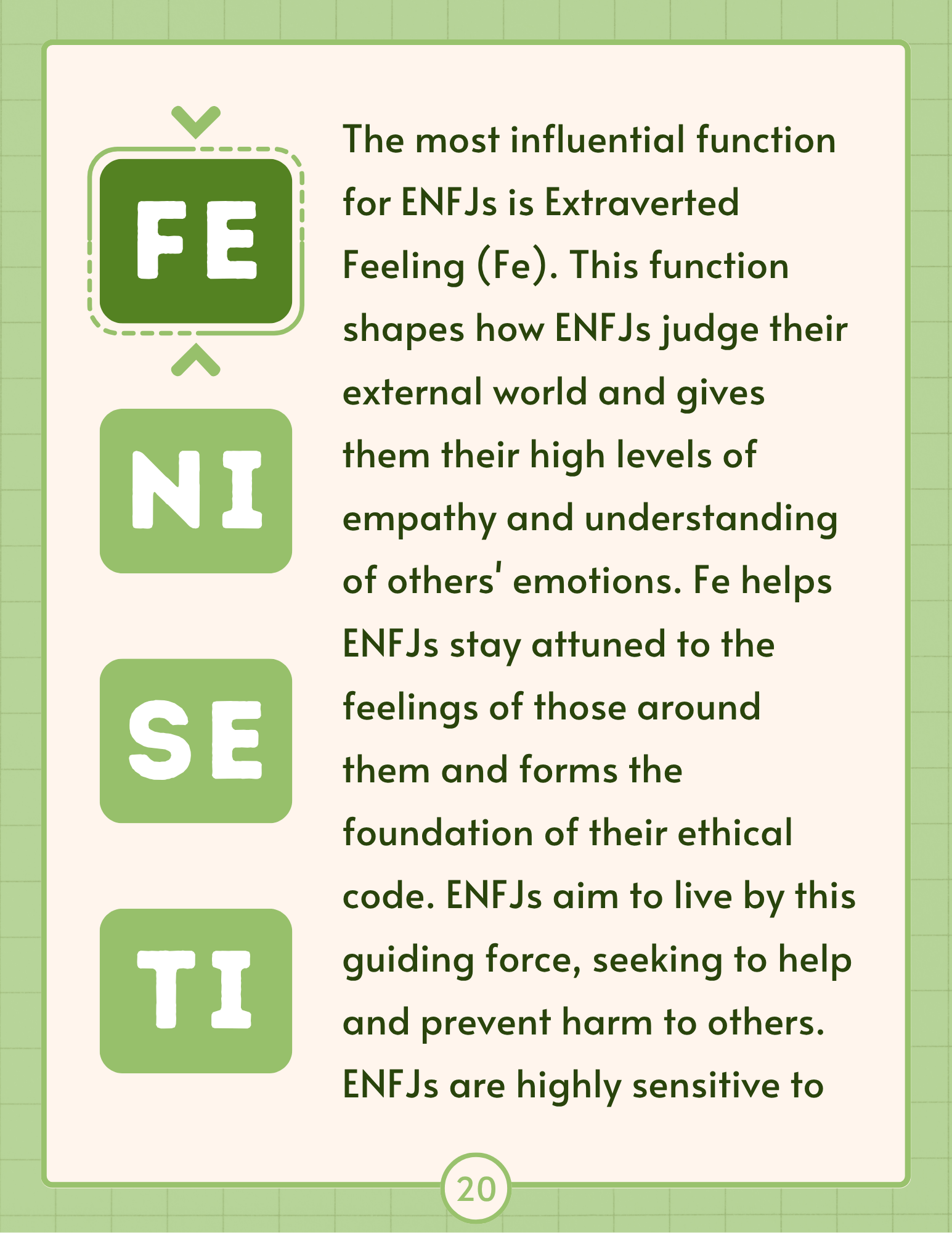
ENFJs lead with Extraverted Feeling (Fe), which in this model is tied to other people's feelings, ethics, care, and collective judgments about what is good or bad. Introverted Intuition (Ni) supports it by focusing their own wants, decisions, and future direction. Together, these functions can make ENFJs highly attentive to people while also taking responsibility for where their choices are leading.
Fe · Ni · Se · Ti

ENFJ at a glance
A quick overview before you go deeper. These are tendencies within this model, not rules. They come from the ENFJ's functions, cognitive attitudes, temperament, and interaction style.
Strengths
- Reading and responding to others' feelings
- Taking responsibility for ethical impact
- Making deliberate long-range decisions
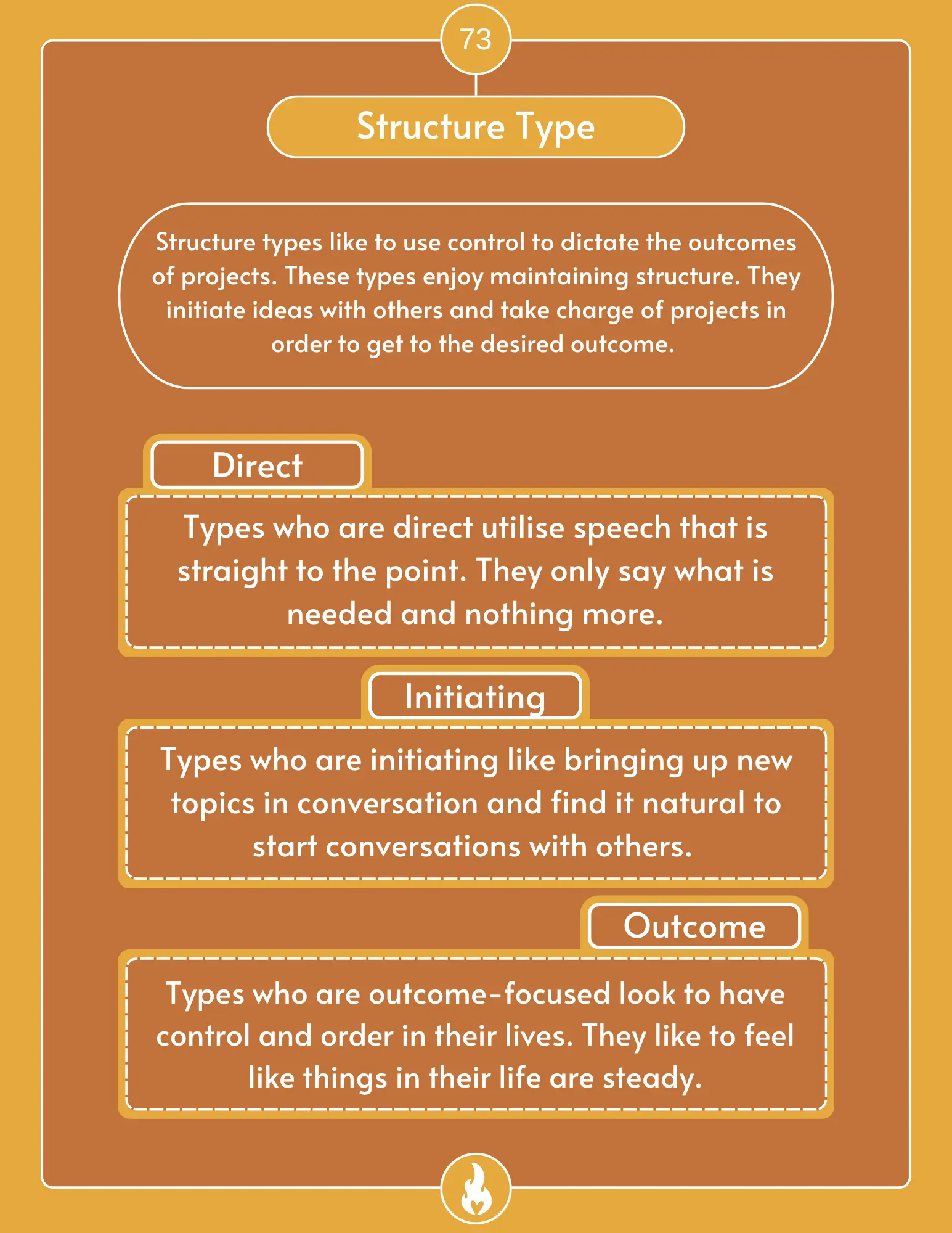
- Direct, initiating leadership
Struggles
- Overextending care for other people
- Doubting personal worth
- Feeling insecure about their own reasoning
- Overlooking comfort, routine, or personal needs
With growth
- Caring for others without overextending
- Making responsible decisions about the future
- Thinking through ideas independently
- Balancing people with personal needs
Under stress
- Questioning personal worth
- Assuming poor intentions too quickly
- Ignoring comfort or basic routines
- Becoming hostile toward outside viewpoints
Your cognitive functions
The eight processes behind the four letters
Within this model, an ENFJ has eight cognitive functions arranged by attitude and level of awareness. The first four form the ego. The lower four receive less automatic attention and are especially useful for understanding blind spots and development. Tap any function to see how its role changes for an ENFJ.
Conscious stack
Shadow stack
Extraverted Feeling
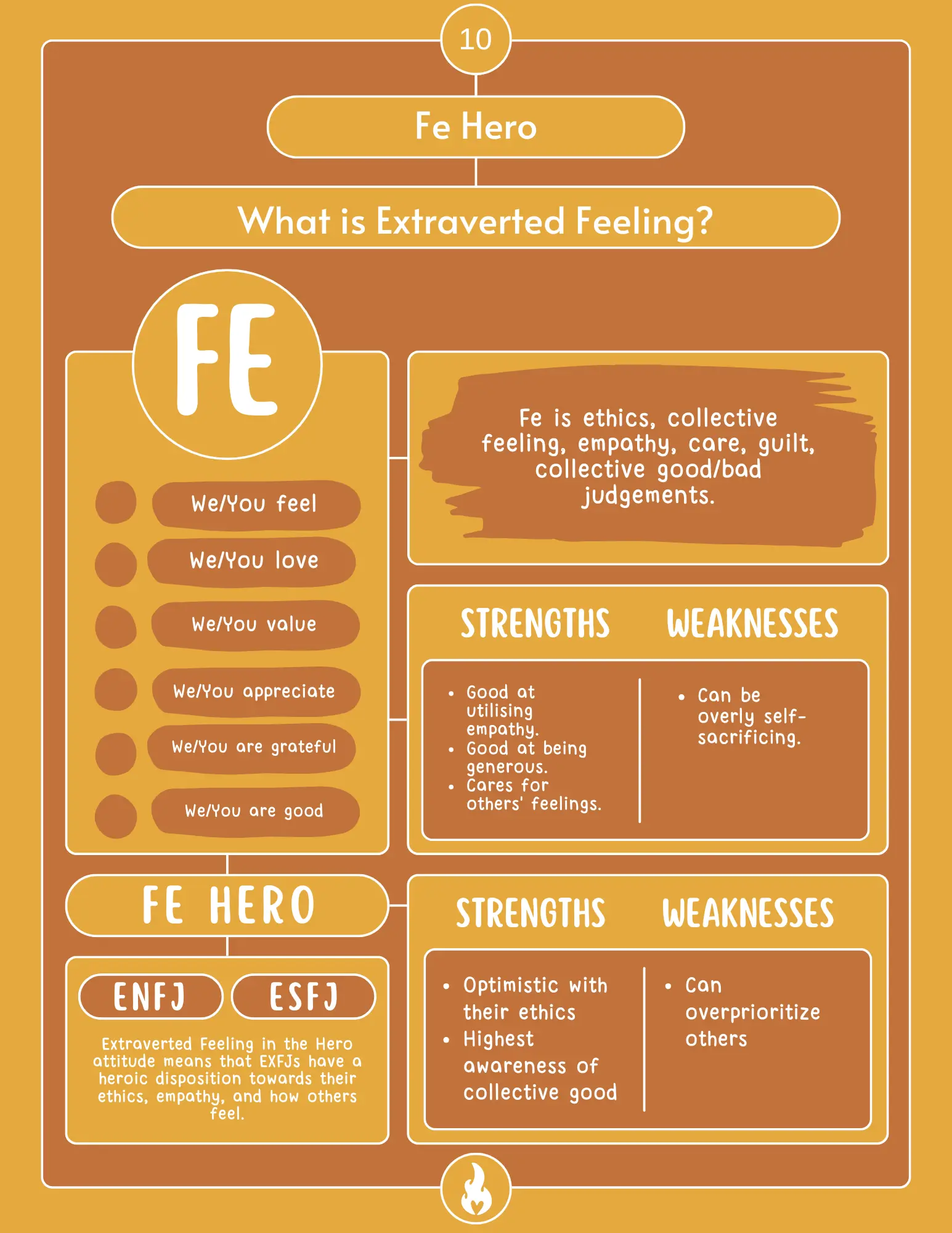
Fe is tied to other people's feelings, ethics, empathy, care, social norms, and collective judgments about what is good or bad. In the Hero position, it becomes the ENFJ's most prominent everyday problem-solving process. ENFJs may therefore respond quickly to emotional and social information and place strong attention on how their actions affect other people.
Fe can be overused when every problem becomes your responsibility. Care for people deliberately, but leave room for them to manage their own feelings, choices, and consequences.
Position 1 of 8 · most conscious
Introverted Intuition
Ni is tied to personal wants, decisions, goals, willpower, and future direction. In the Parent position, ENFJs tend to approach these areas more responsibly and carefully. This can make them deliberate about where they are going, what they commit to, and whether a decision supports the future they actually want.
Use Ni to make responsible choices rather than reacting only to immediate social pressure. Ask what you want the decision to lead to and whether the goal is worth the commitment.
Position 2 of 8 · supporting
Extraverted Sensing
Se is tied to the external present, physical reality, performance, practical skill, and other people's sensory experience. In the Child position, ENFJs may approach these areas with optimism and enthusiasm. This can support expressive performance and creating enjoyable experiences for others, although immature Se can sometimes overestimate what will actually be helpful.
Give Se responsible outlets through performance, exercise, cooking, making, or shared experiences. Pay attention to whether the experience is genuinely useful or enjoyable for the other person, not only whether it feels exciting to provide it.
Position 3 of 8 · relaxed and playful
Introverted Thinking
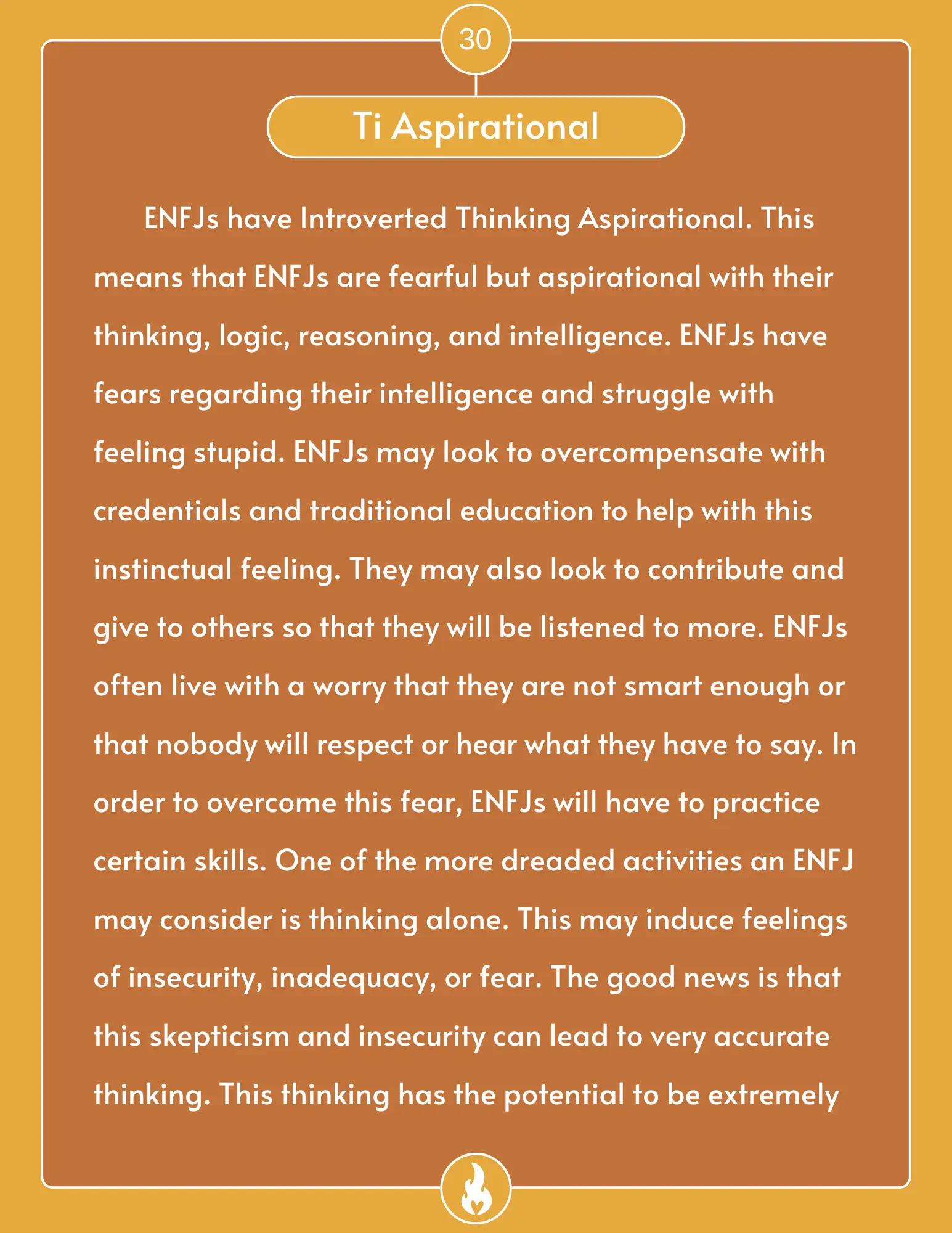
Ti handles personal true-or-false judgment: whether an idea makes logical sense to you. In the Aspirational position, ENFJs may feel insecure about their own intelligence or ability to determine what is true, while also having strong potential to develop this area. Growth comes through humility, independent reasoning, and repeated practice with logical evaluation.
Spend time thinking through questions on your own. Separate whether an idea feels socially comfortable from whether the reasoning is actually true, and verify the conclusion before accepting it.
Position 4 of 8 · aspirational edge of the ego
Introverted Feeling
Fi covers personal feelings, values, morals, and self-worth. In the Nemesis position, it becomes an area of worry and uncertainty. ENFJs may question whether they are good enough or place too much weight on negative feelings about themselves, especially when their usual confidence in caring for others is shaken.
Build self-worth from realistic personal values rather than from whether everyone around you is pleased. Notice what you actually feel and evaluate yourself by your choices, not only by other people's responses.
Position 5 of 8 · shadow
Extraverted Intuition
Ne tracks other people's wants and intentions, external possibilities, and possible consequences. In the Critic position, ENFJs may become overly critical of what other people want or hold themselves to an unrealistic standard of predicting every consequence. Underdeveloped Ne Critic can also encourage premature assumptions about another person's intentions.
Hold other people's intentions to realistic standards. Ask what they actually want, consider the consequences you can reasonably know, and avoid treating suspicion as proof.
Position 6 of 8 · shadow
Introverted Sensing
Si covers personal experience, long-term memory, comfort, routine, personal needs, duty, and loyalty. In the Trickster position, these areas receive relatively little automatic attention. ENFJs may overlook their own comfort or health, struggle to maintain consistent habits, or keep pushing until the cost to their well-being becomes difficult to ignore.
Use simple routines to make personal needs harder to overlook. Regular meals, sleep, health tasks, and written commitments can give Si more consistent attention without requiring it to become your main focus.
Position 7 of 8 · shadow
Extraverted Thinking
Te deals with outside rationale, other people's thinking, sources, rules, statistics, reputation, and collective judgments about what is correct. In the Demon position, this function can take on a strongly negative tone when activated. Within this model, ENFJs may become hostile toward other people's viewpoints or unusually sensitive to feeling dismissed, unheard, or publicly disrespected.
When outside opinions start to feel threatening, slow down and listen before reacting. Your own intelligence and worth do not depend on defeating someone else's viewpoint, and disagreement does not erase your perspective.
Position 8 of 8 · lowest awareness
Four ways to develop your stack
Each suggestion below connects to a specific ENFJ function or attitude. They are practical starting points within the model, not rules for every ENFJ.
Separate care from responsibility
Fe Hero notices other people's feelings quickly, but noticing a problem does not automatically make it yours to solve. Decide deliberately where your responsibility begins and ends.
Practise independent reasoning
Ti Aspirational develops through repeated logical evaluation. Work through an argument on its own terms and ask whether it is true before deciding how you feel about the person presenting it.
Make your future deliberate
Ni Parent is responsible with personal wants and decisions. Before committing to a goal, ask whether it genuinely serves the future you want rather than only meeting immediate expectations.
Protect basic routines
Si Trickster can make personal comfort and routine easy to overlook. Simple systems for sleep, meals, health, and commitments can prevent caring for everyone else from becoming neglect of yourself.
Go deeper
The ENFJ books
This page introduces the main ENFJ patterns. The two books go further into the function stack, development, relationships, career, and how the different parts of the model interact.
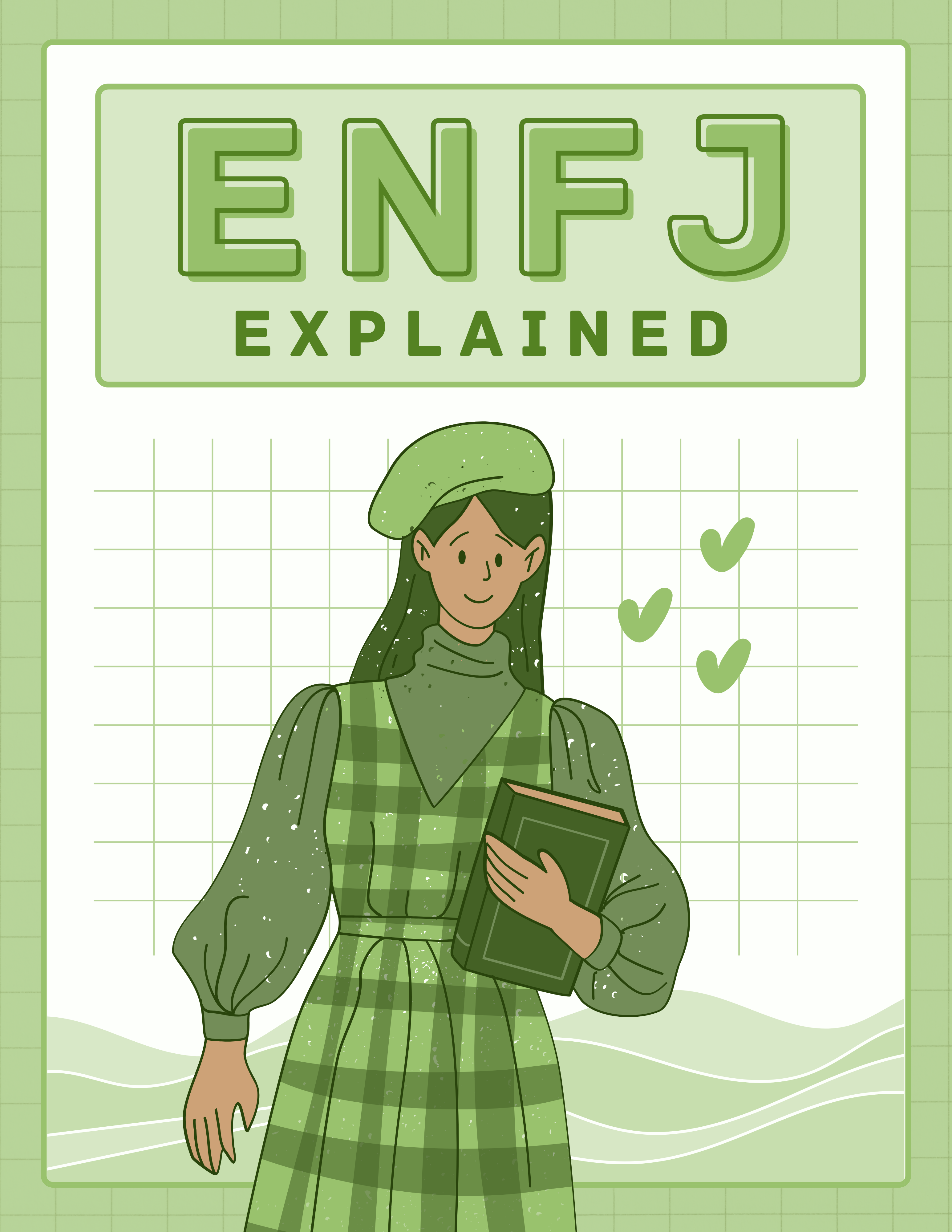
ENFJ Explained
Understand the stack
A detailed breakdown of the ENFJ stack, including all eight functions, their attitudes, and how the different positions change the way each function is expressed.
- All eight cognitive functions
- Function attitudes and positions
- Strengths and blind spots
- ENFJ development patterns
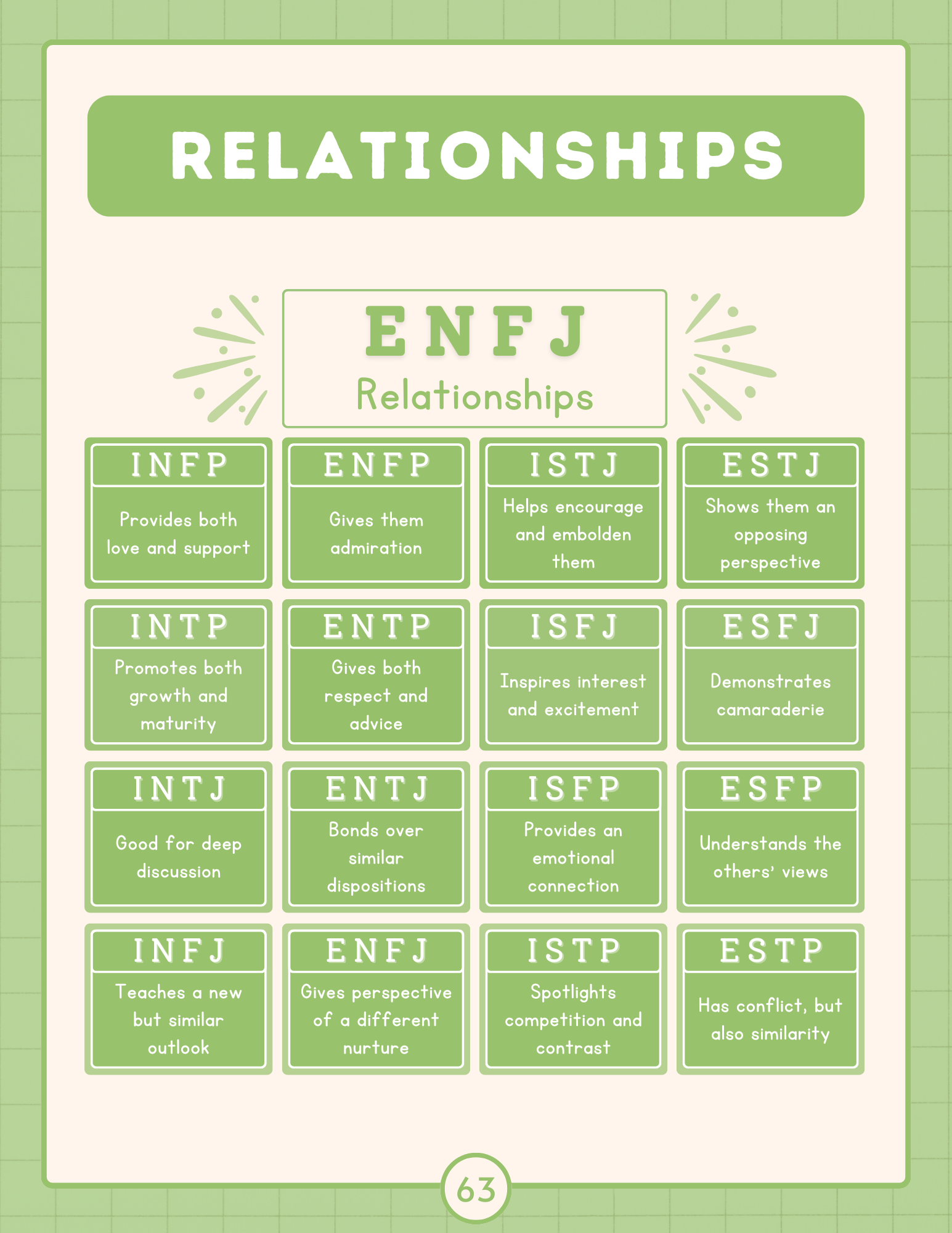
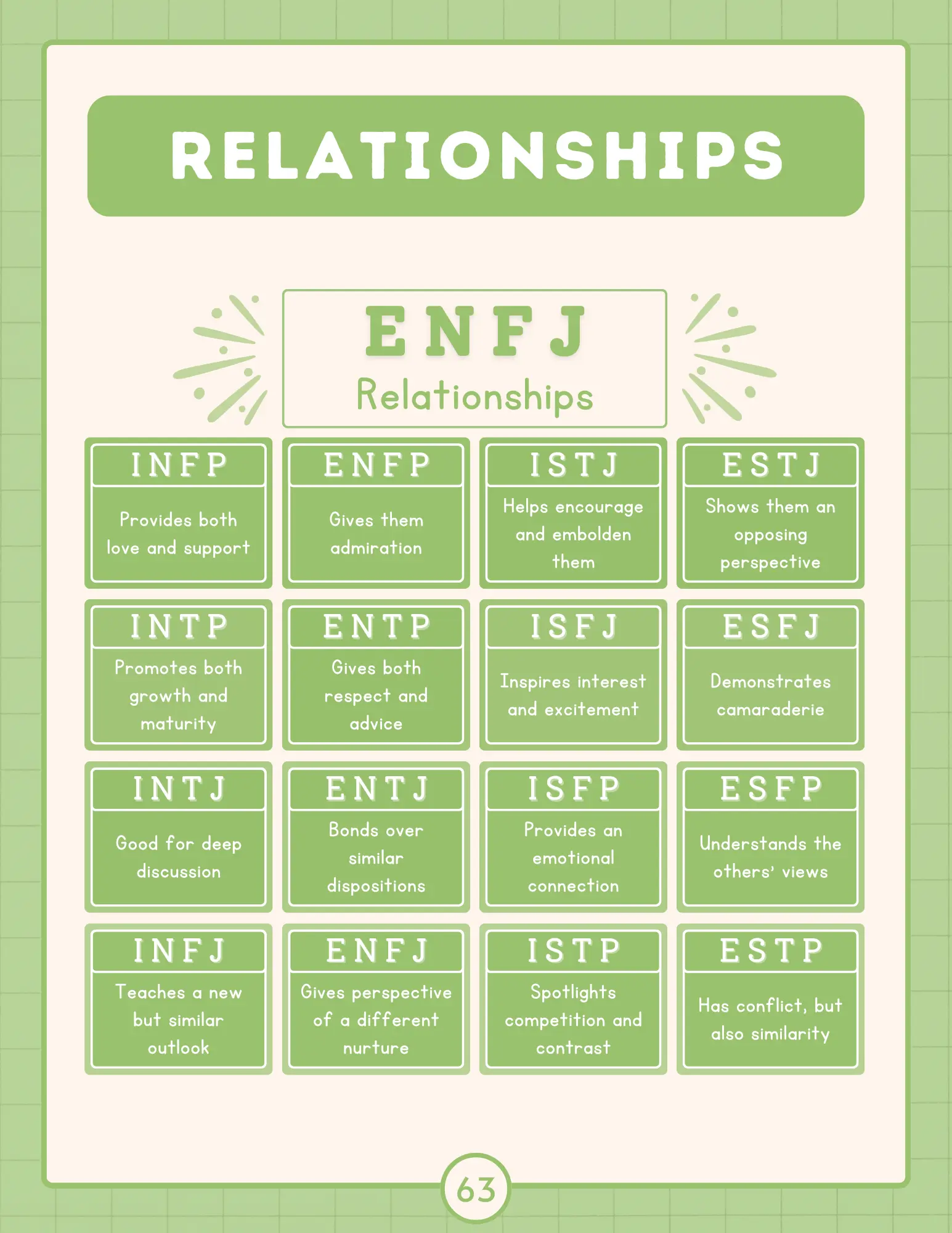
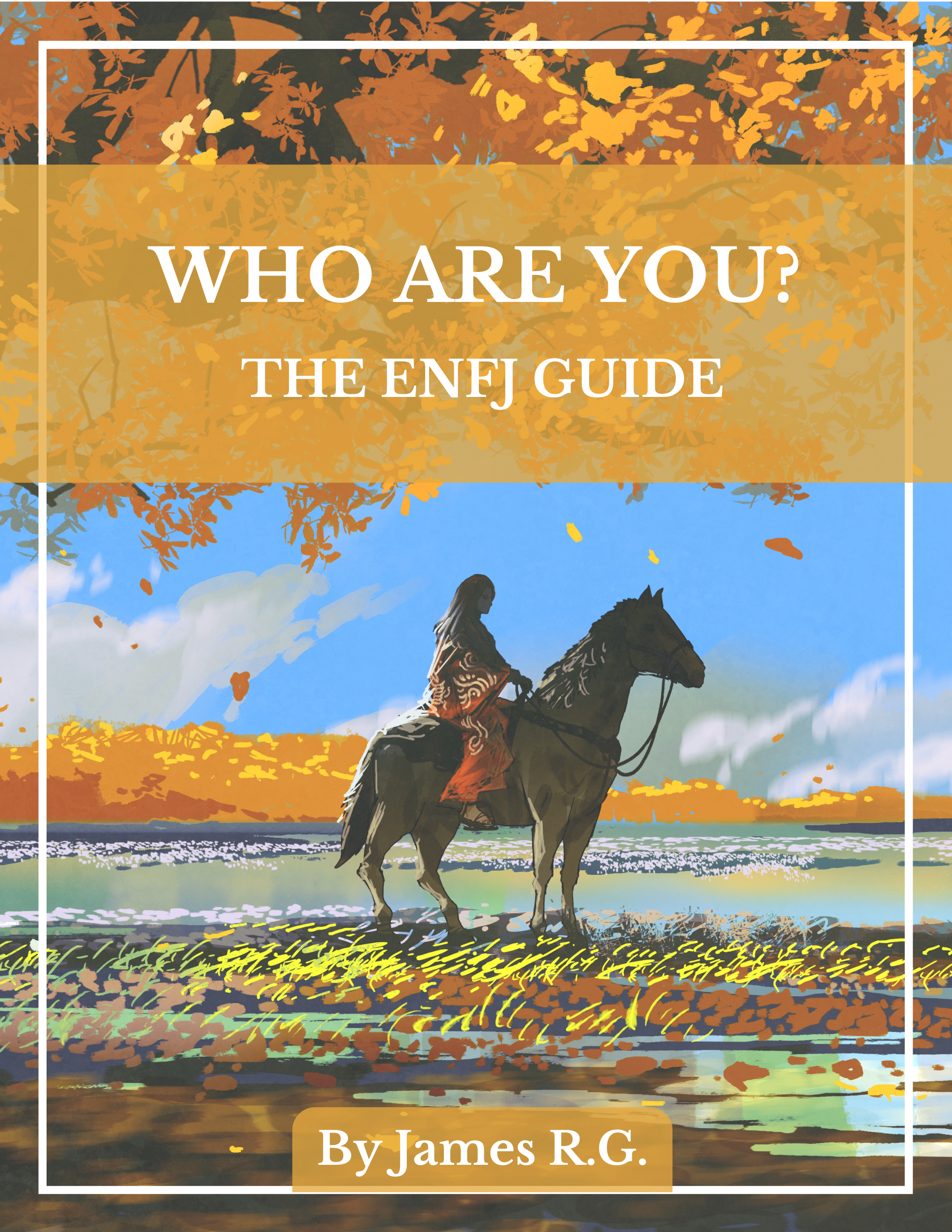
ENFJ Guide
Apply the model
A practical companion for applying the ENFJ framework to relationships, career, development, and everyday decisions after you understand the function stack.
- Relationships and compatibility
- Career patterns and challenges
- Growth and development
- Everyday ENFJ strategies
Not sure ENFJ is your best fit?
ENFJ can be confused with types that share some similar surface traits. A typing session compares your functions, attitudes, temperament, and interaction style to identify which overall pattern fits best within the model.