I N T J
So, you're an INTJ.
The Mastermind
You see the endgame before anyone else has noticed the game started. Your mind builds systems, spots flaws, and plans three moves ahead. You are not cold; you just do not waste energy on what does not matter, and most things do not matter.
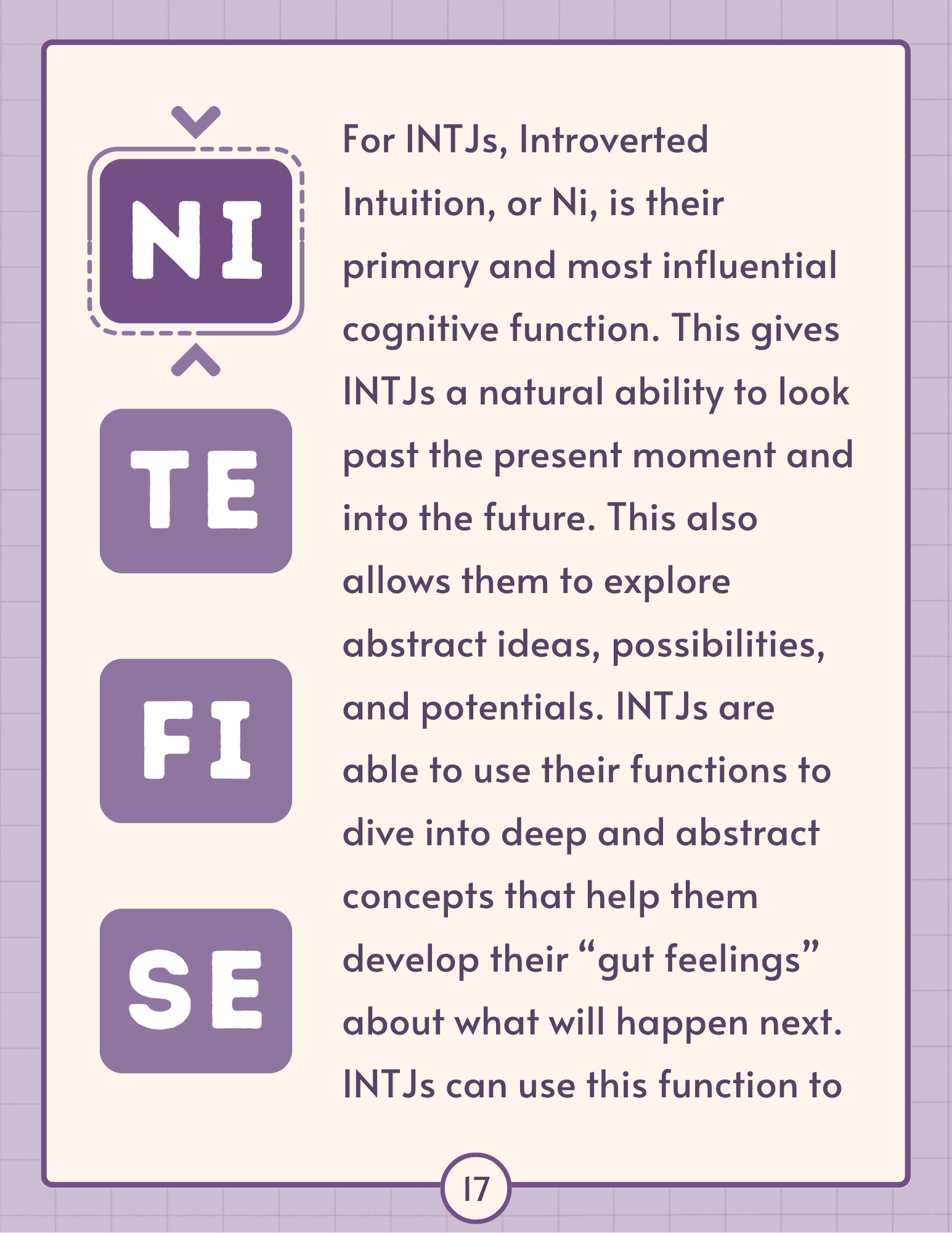
Ni · Te · Fi · Se

INTJ at a glance
A quick portrait before you go deeper. None of this is a box; it is a starting point for understanding how your mind tends to work.
Strengths
- Strategic long-range vision
- Independent, original thinking
- Relentless follow-through
- Cutting through noise to the point
Struggles
- Impatience with inefficiency
- Dismissing emotional input
- Difficulty asking for help
- Perfectionism that stalls progress
At your best
- Turning vision into reality
- Solving problems nobody else can
- Quietly loyal and deeply caring
- Building things that last
Under stress
- Overindulging the senses
- Becoming rigidly controlling
- Withdrawing completely
- Obsessive worst-case thinking
Your cognitive functions
The eight processes behind the four letters
Your type is not really four letters. It is an ordered stack of eight mental processes, each one more or less conscious than the next. The first four you use naturally. The last four are your shadow, and they mostly show up when you are stressed or pushed. Tap any function to see how it works in you.
Conscious stack
Shadow stack
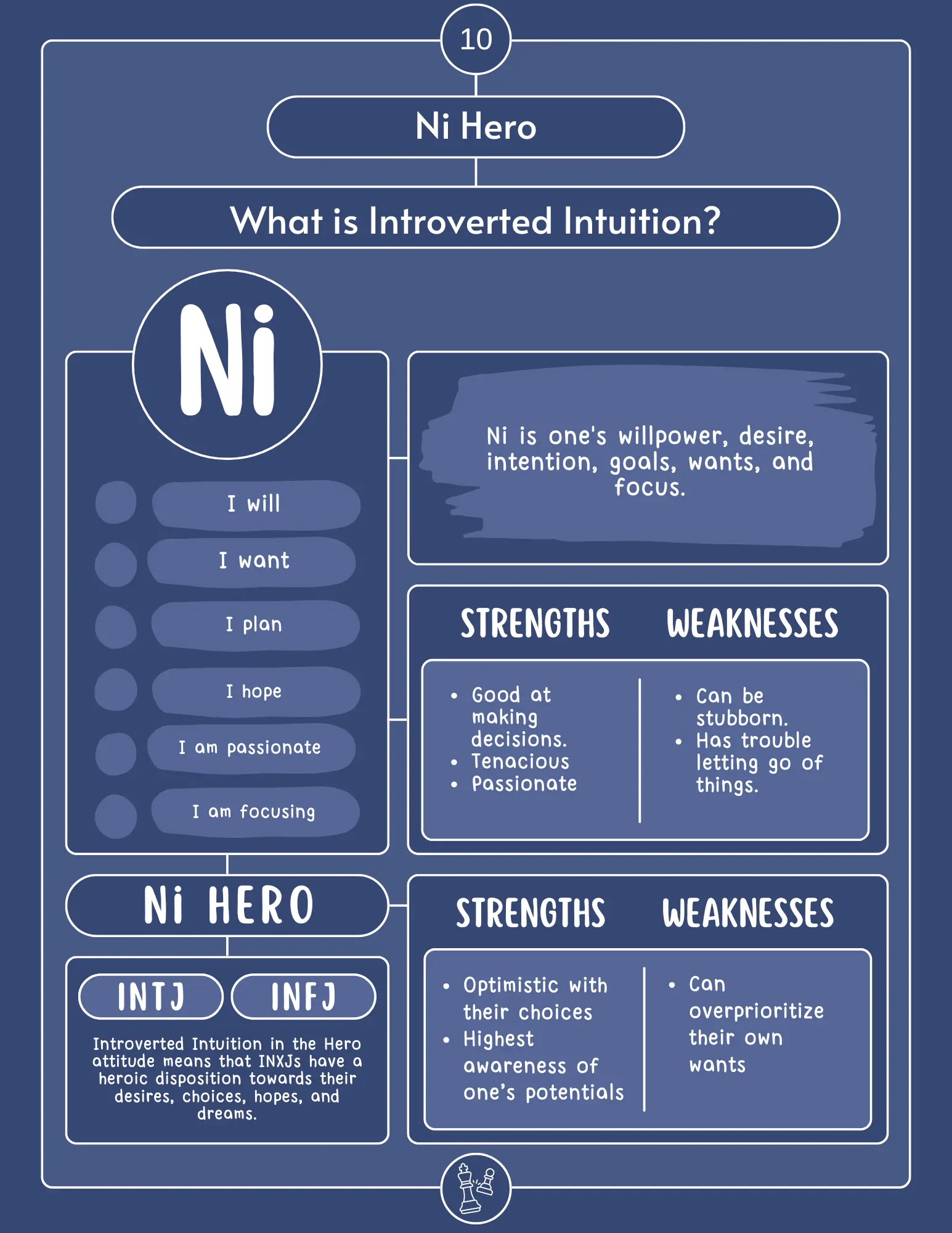
Introverted Intuition
Your lead process. Your mind works like a chess engine: it takes in data, strips away what is irrelevant, and converges on a single insight about where things are heading. You see the destination before most people have packed their bags. This is the source of your strategic confidence, your ability to plan years ahead, and that frustrating experience of being right about something long before you can prove it.
Your vision is usually right, but your certainty can alienate people before they catch up. Learn to show your work. Walk people through the steps, not just the conclusion, even when it feels painfully slow.
Position 1 of 8 · most conscious
Extraverted Thinking
Your execution engine. Where Ni sees the vision, Te builds it. You organize, delegate, measure, optimize. You want things to work, and you have little patience for systems that do not. This makes you formidable at getting things done and occasionally terrifying to people who are not keeping up. It also means you can default to efficiency as a value when the situation actually calls for patience or empathy.
Efficiency is your superpower, but it is not always the right tool. When someone comes to you with a problem, ask whether they want a solution or a listener. You will default to solving. Sometimes the better move is to just be present.
Position 2 of 8 · supporting
Introverted Feeling
Your quiet, private heart. Beneath the strategic exterior you carry a deep set of personal values and a capacity for loyalty that surprises people who think you are just a cold thinker. When you care about something, you care intensely. This function gives you artistic taste, moral conviction, and a stubborn devotion to the people and causes you have chosen. It can also make criticism of your work feel like an attack on you personally.
Let people see this side of you more often. Your Fi is what makes you human to the people around you, and it is often the thing they value most. Vulnerability is not weakness; for an INTJ, it is actually a strategic advantage in relationships.
Position 3 of 8 · relaxed and playful
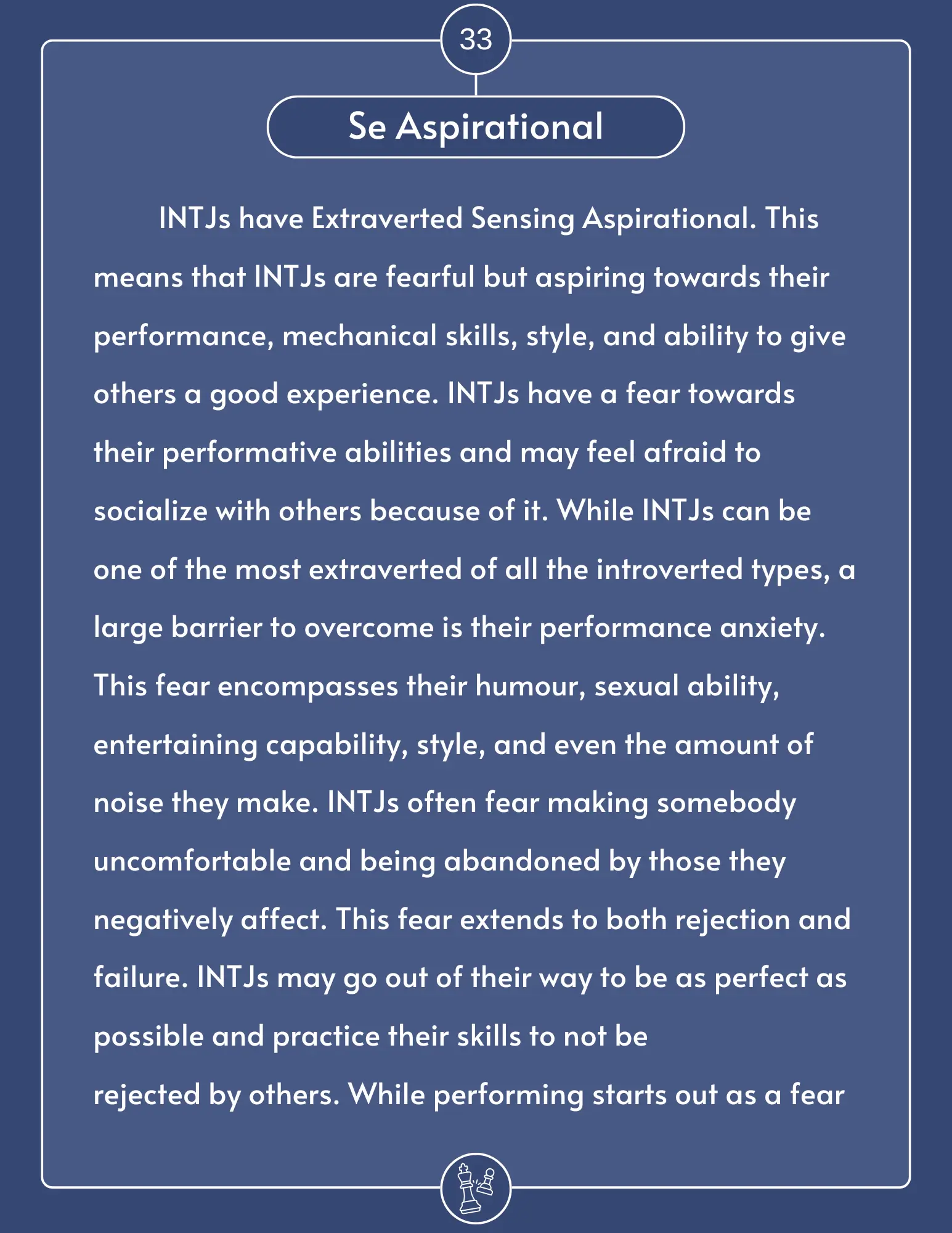
Extraverted Sensing
Your growth edge. Living in the moment, enjoying physical experience, being spontaneous and present: none of this comes naturally. You live in your head, in the future, in the plan. When you develop Se, it grounds you, brings pleasure, and loosens the grip of constant strategizing. When you are stressed, it flips: bingeing, overindulging, reckless physical behaviour that is completely out of character.
Schedule presence. Exercise, cook, build something with your hands, take a walk without a podcast. Your mind needs a break from planning, and your body is the only thing that can give it one. The grip behaviour is your signal that you have ignored this too long.
Position 4 of 8 · least conscious, most aspirational
Extraverted Intuition
The scatterer. Where your Ni converges on one clear vision, Ne under stress sprays outward into every possibility that could go wrong. Suddenly your confident certainty evaporates and you see threats everywhere: what if I am wrong, what if there is something I have not considered, what if the whole plan collapses from an angle I cannot see. It turns your strategic mind against itself.
When the what-if spiral starts, write every scenario down. Seeing them on paper shrinks them. Then ask: which of these are actually likely? Your Ni can sort them once they are named. The anxiety lives in the vagueness, not the facts.
Position 5 of 8 · shadow
Introverted Thinking
A harsh inner logician. Where your Te builds systems that work in the real world, Ti under stress tears them apart from the inside: is this logically consistent? Is the framework really airtight? It can send you into paralysing loops of internal debate, second-guessing your own reasoning and finding contradictions in things you were certain about an hour ago.
Perfection of logic is not the same as effectiveness. When your inner critic starts dismantling your own plan, ask: does this actually need to be logically flawless, or does it just need to work? Your Te already knows the answer.
Position 6 of 8 · shadow
Extraverted Feeling
Your awkward relationship with group emotion. Reading the emotional temperature of a room, performing social niceties, navigating office politics, managing other people's feelings: this is where you get tripped up. You can come across as blunt, dismissive, or socially tone-deaf, not because you do not care, but because this channel barely registers for you. When you try to use it consciously, it can feel forced and performative.
You do not need to become a social performer. But a few small gestures go a long way: acknowledge someone's effort before you critique their work, say thank you when it matters, and ask how someone is doing before you jump into the agenda. Your Fi actually cares; Fe is just the delivery mechanism.
Position 7 of 8 · shadow
Introverted Sensing
Your deepest blind spot. Under extreme stress, this surfaces as obsessive fixation on past failures, bodily symptoms, or small concrete details that suddenly feel catastrophic. You might replay a mistake endlessly, convinced it defines you, or cling rigidly to a routine as though letting go of it would unravel everything. It is the opposite of your forward-looking Ni, and it can trap you in a place your conscious mind does not know how to escape.
If you are stuck replaying the past or fixating on physical symptoms, that is your demon function, not the truth. The exit is forward, not backward: reconnect with your Ni by asking "what am I building toward?" The past only matters as data for the plan.
Position 8 of 8 · least conscious
A few things that actually help
Not a life plan, just the handful of shifts that tend to make the biggest difference for INTJs. Each one comes straight from your function stack.
Show your reasoning, not just your conclusion
Your Ni leaps ahead and your Te builds the case in your head. But when you deliver the answer without the path, people feel steamrolled. Walk them through it. The thirty seconds it costs you buys you buy-in that would otherwise take weeks.
Let people in
Your Fi is deep but hidden. The people who matter to you often have no idea how much you care, because you show it through competence, not words. Say it. Write it. Name it out loud. Loyalty that nobody sees is loyalty that nobody feels.
Get out of your head and into your body
Your inferior Se is your release valve. When you are stuck in a loop of planning and second-guessing, the answer is not more thinking. It is movement, texture, physical presence. Exercise, build, make. Your best insights often arrive when your hands are busy.
Not everything is a problem to solve
Your Te wants to fix things. Sometimes the person talking to you does not want a fix; they want to be heard. Learning to sit with that, to be present without optimizing, is the growth edge that transforms your relationships.
Go deeper
The INTJ books
This page is the surface. Both books go all the way down, from the cognition behind your type to how it plays out in your relationships, your work, and your growth.
INTJ Explained
Understand yourself
The complete breakdown of the INTJ mind. Every function in your stack, how they work together, and why you strategize, build, and withdraw the way you do. If this page made something click, this is where the whole picture comes together.
- All eight functions in depth
- How your stack shapes you
- Strengths and blind spots
- What drives INTJ behaviour
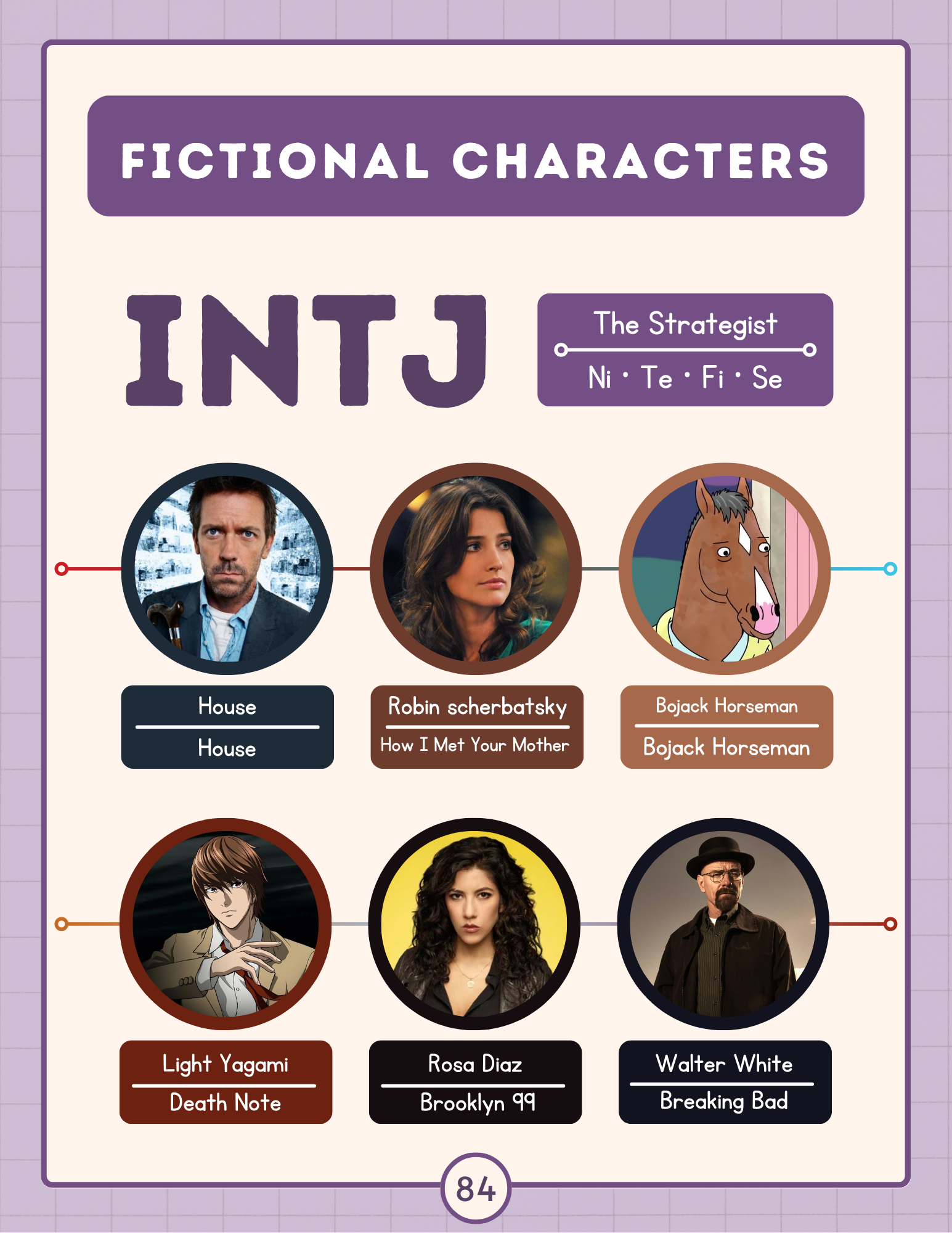
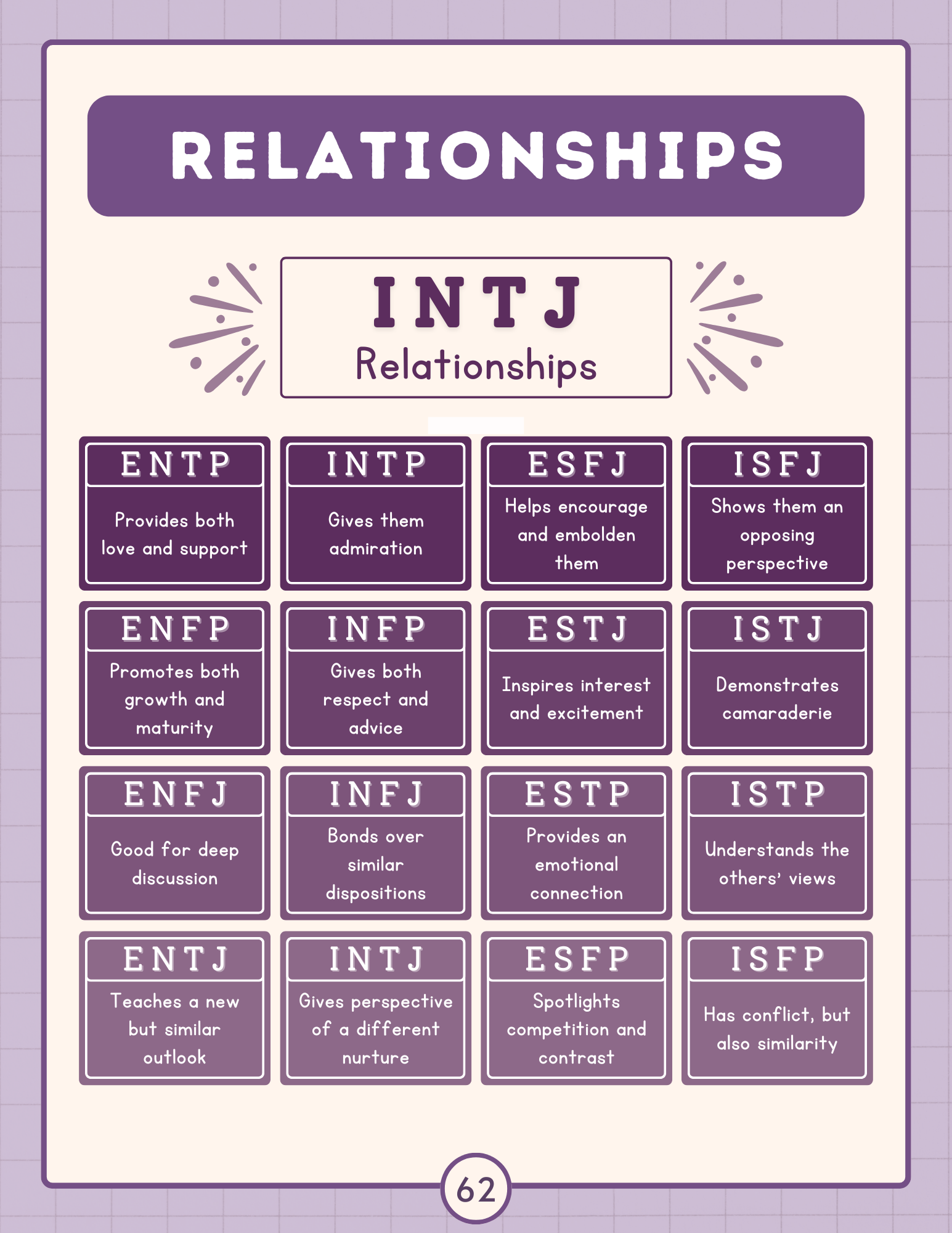

INTJ Guide
Live it well
The practical companion. Once you understand how your mind works, the Guide helps you use it, in your relationships, your career, and the day-to-day work of growing into your type instead of fighting it.
- Relationships and compatibility
- Careers that fit
- Growth and stress management
- Everyday INTJ strategies
Not sure you are really an INTJ?
INTJ gets confused with INTP and ISTJ all the time. If you want to be certain, a typing session will settle it.