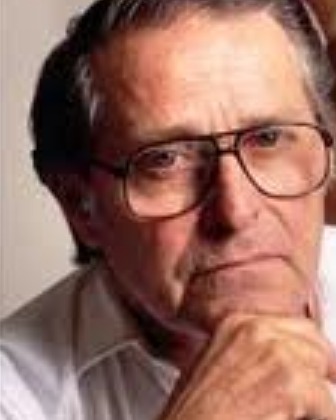
The researchers · Dr. David Keirsey
The four temperaments
The oldest layer of the model: four broad patterns of what people focus on and value, developed in modern form by David Keirsey.
From Keirsey to OnType
An ancient idea, a modern theory
The idea of four temperaments reaches back to ancient Greek thought, including Plato. Psychologist David Keirsey developed it into a modern theory in Please Understand Me (with Marilyn Bates, 1978), linking four temperaments to the sixteen types. Each temperament shares characteristic interests, values and ways of contributing.
OnType keeps Keirsey's four groups, calling his Rationals the Intellectuals, and builds on later work in the Jungian community led by C.S. Joseph. Each temperament is made of three pairs of traits: concrete or abstract, affiliative or pragmatic, and interest or systematic.
Concrete types, whose sensing functions sit high in their stack, focus on what is and what was: the tangible and the useful. Abstract types focus on what could be: hypotheticals, possibilities and hidden patterns.
The model at a glance
Four temperaments, three pairs of traits
Idealists NF
Abstract · Affiliative · Interest
People-focused and utopian
Intellectuals NT
Abstract · Pragmatic · Systematic
Theoretical and innovative
Artisans SP
Concrete · Pragmatic · Interest
Present-focused and hands-on
Guardians SJ
Concrete · Affiliative · Systematic
Stability and tradition
In OnType's model
Tradition and realism, vision and innovation
Among the concrete types, high Si users, the Guardians, embody tradition and preserve past wisdom, keeping society steady. High Se users, the Artisans, reinforce realism and what is normal in the present. Among the abstract types, the Idealists look toward social innovation and people's potential, and the Intellectuals toward theory and technological innovation.
Sources
- Keirsey, D., & Bates, M. M. (1978; 2006 ed.). Please Understand Me: Character & Temperament Types. Prometheus Nemesis.
- Montgomery, S. (2011). People Patterns: A Popular Culture Introduction to Personality Types and the Four Temperaments. Archer.
- R.G., J. The Code Behind the 16 Types. OnType.
More on the model: Jung: functions · Beebe: attitudes · Berens: interaction styles · C.S. Joseph: four sides
Which temperament are you?
Take the free test to see where you fit, or read how the pieces work together.