E N F J
So, you're an ENFJ.
The Teacher
Warm, driven, and tuned to people in a way that moves them. You see who someone could become and you help them get there. You lead with feeling and back it with a quiet strategic mind, which is why people trust you before they fully understand why.
Fe · Ni · Se · Ti

ENFJ at a glance
A quick portrait before you go deeper. None of this is a box; it is a starting point for understanding how your mind tends to work.
Strengths
- Natural, inspiring leadership
- Deep empathy and warmth
- Seeing potential in people
- Building real community
Struggles
- People-pleasing
- Taking criticism personally
- Overextending for others
- Neglecting your own needs
At your best
- Bringing out the best in others
- Decisive and visionary
- Warm without being naive
- Turning conviction into action
Under stress
- Becoming quietly controlling
- Sharp, uncharacteristic criticism
- Withdrawing and overanalyzing
- Doubting your own worth
Your cognitive functions
The eight processes behind the four letters
Your type is not really four letters. It is an ordered stack of eight mental processes, each one more or less conscious than the next. The first four you use naturally. The last four are your shadow, and they mostly show up when you are stressed or pushed. Tap any function to see how it works in you.
Conscious stack
Shadow stack
Extraverted Feeling
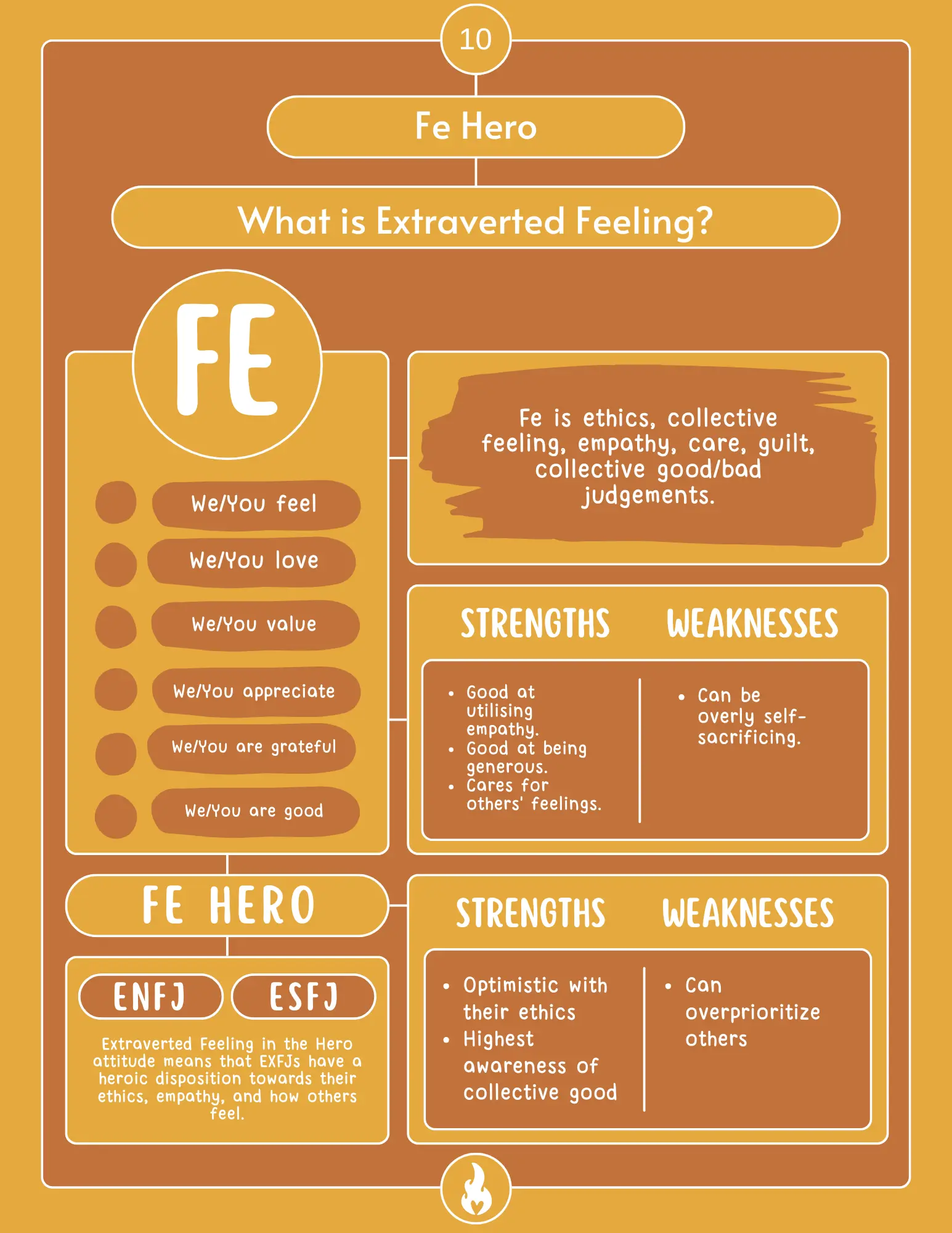
Your lead process. You feel the room before you think about it. You read emotional currents instinctively, move to create harmony, motivate, and guide. This is your charisma, your warmth, and the reason people open up to you so quickly. It is also why other people's emotions can hit you like they are your own, and why disapproval or conflict can feel almost physical.
Your warmth is real, but it works best when you are honest, not just harmonious. Saying what people need to hear, even when it is uncomfortable, is a deeper kind of care than keeping the peace.
Position 1 of 8 · most conscious
Introverted Intuition
Your quiet strategic mind. Behind the warmth sits a pattern-reader that sees where people and situations are heading. This is what makes you more than just empathetic: you see potential. You sense what someone could become, you spot the trajectory of a group, and you guide accordingly. When it clicks with your Fe, you become genuinely visionary about people.
Give yourself private time to let your Ni work. Your best insights do not arrive in conversation; they arrive in the quiet afterward. Protect that space, or your vision gets drowned out by everyone else's noise.
Position 2 of 8 · supporting
Extraverted Sensing
Your playful, present side. You are more physically expressive and in-the-moment than most NF types. You notice aesthetics, enjoy good food, good music, good atmosphere. It gives you presence and a kind of magnetism that makes your warmth feel tangible, not just verbal. When it is working well, it keeps you grounded and spontaneous.
Lean into this one. Cook, dance, dress well, be in nature. Your Se is a gift that keeps your big-picture mind from floating away. It also recharges you faster than you would expect.
Position 3 of 8 · relaxed and playful
Introverted Thinking
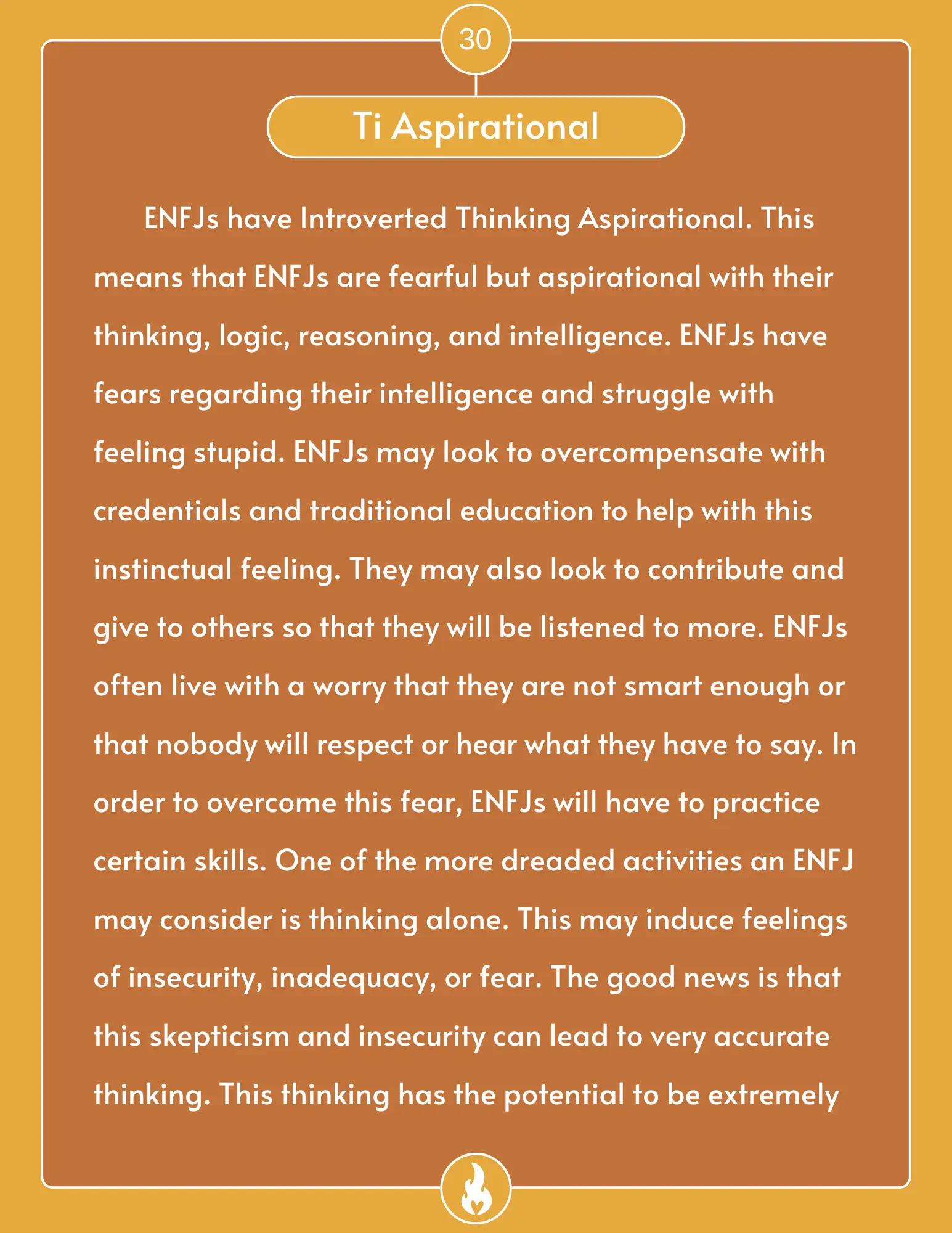
Your growth edge. Cold, impersonal logic does not come naturally. You tend to evaluate ideas through how they land on people, not whether they hold up structurally. Under stress, you can either dismiss logical criticism as heartless, or swing the other way and become rigidly analytical in a way that feels forced. Developing this function gives you real intellectual independence.
When someone disagrees with you logically, resist the urge to hear it as a personal attack. Sit with the argument on its own terms. Your Fe will want to make it about the relationship; let your Ti hold the idea separate from the person.
Position 4 of 8 · least conscious, most aspirational
Introverted Feeling
The doubting mirror of your feeling. Where your Fe reads the room and tends to others, Fi under stress turns inward and asks whether you are being authentic, whether you actually matter, whether people value you for who you are or just for what you give them. It can trigger spirals of self-doubt that feel completely out of character.
When the "am I even appreciated?" spiral starts, name it as your shadow, not the truth. Write down what you actually feel and need. You spend so much time in other people's emotions that your own can feel foreign when they finally surface.
Position 5 of 8 · shadow
Extraverted Intuition
A harsh judge of possibilities. Where your Ni quietly sees one clear direction, Ne under stress sprays outward into every way things could go wrong with people. It can make you catastrophize about your relationships, become cynically skeptical of someone's potential, or second-guess your own read on a situation you would normally trust.
If you catch yourself listing all the reasons someone will fail or all the ways a plan could collapse, that is your critic, not your judgment. Return to your Ni: what does your gut actually say? Trust that first.
Position 6 of 8 · shadow
Introverted Sensing
Your awkward relationship with routine and past detail. You can overlook your own physical needs: skipping meals, ignoring fatigue, pushing through when your body is done. Practical details and "how it was always done" can feel like a trap. You might forget commitments or lose track of concrete promises you made in the heat of caring.
Write things down. Not because you are forgetful by nature, but because your mind is pointed outward at people, not inward at logistics. A simple system for promises and self-care keeps this function from quietly undermining you.
Position 7 of 8 · shadow
Extraverted Thinking
Your deepest blind spot. Under extreme, sustained stress, this can surface as cold, ruthless efficiency that shocks people who know you: cutting people off, making harsh demands, or bulldozing through situations with an impersonal logic that feels nothing like you. Alternatively, it can show up as feeling completely incompetent at organizing systems, metrics, or anything that demands objective, detached structure.
If you find yourself being uncharacteristically cold and controlling, that is your warning light. Step back, rest, and reconnect with someone you trust. You are not in your right mind here, and big decisions made from this place will not feel like yours later.
Position 8 of 8 · least conscious
A few things that actually help
Not a life plan, just the handful of shifts that tend to make the biggest difference for ENFJs. Each one comes straight from your function stack.
Stop measuring your worth by what you give
Your Fe makes you a natural giver. But when your identity is built on being needed, burnout is not a risk, it is a certainty. You are allowed to exist without earning it.
Learn to sit with disagreement
Your inferior Ti means logical pushback can feel like rejection. It is not. Let people challenge your ideas without hearing it as an attack on your character. The discomfort is growth.
Protect your alone time
You are an extravert who runs on people, but your Ni needs silence to do its best work. Your deepest insights happen after the conversation, not during it. Schedule solitude like you schedule everything else.
Let people struggle
You see someone's potential and you want to carry them to it. Sometimes the kindest thing is to step back and let them find their own way. Not every problem is yours to solve, and not every person is ready for your help.
Go deeper
The ENFJ books
This page is the surface. Both books go all the way down, from the cognition behind your type to how it plays out in your relationships, your work, and your growth.
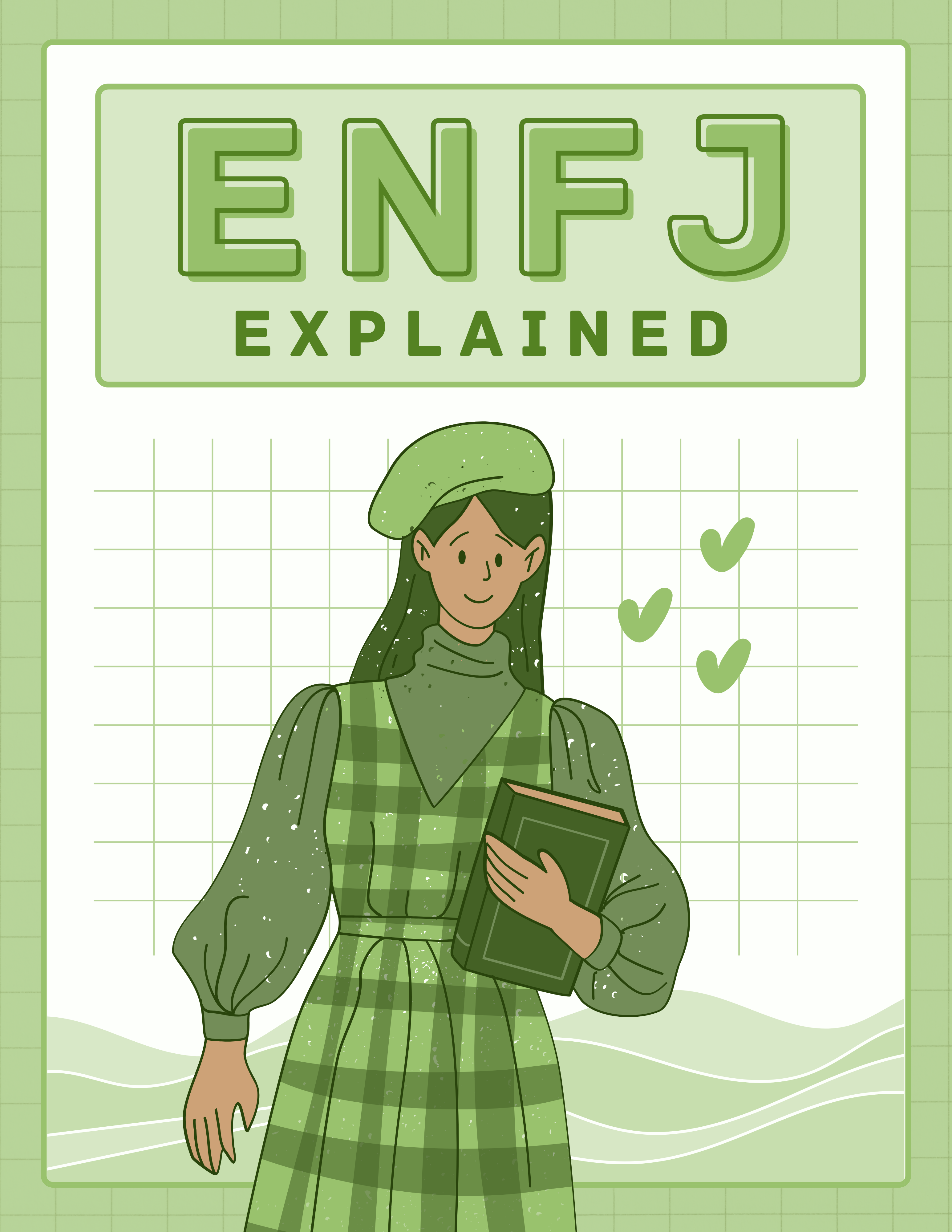
ENFJ Explained
Understand yourself
The complete breakdown of the ENFJ mind. Every function in your stack, how they work together, and why you lead, connect, and care the way you do. If this page made something click, this is where the whole picture comes together.
- All eight functions in depth
- How your stack shapes you
- Strengths and blind spots
- What drives ENFJ behaviour
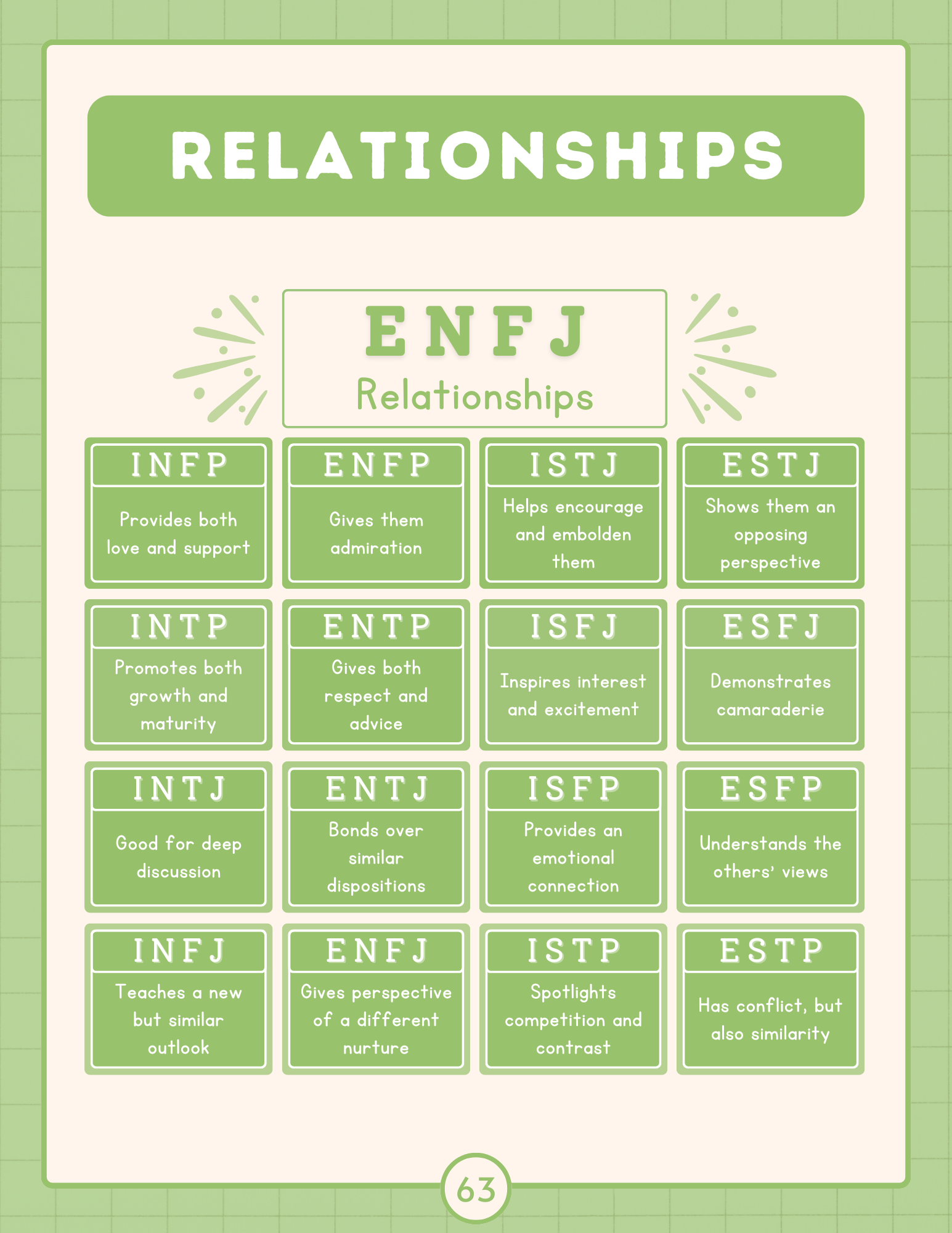
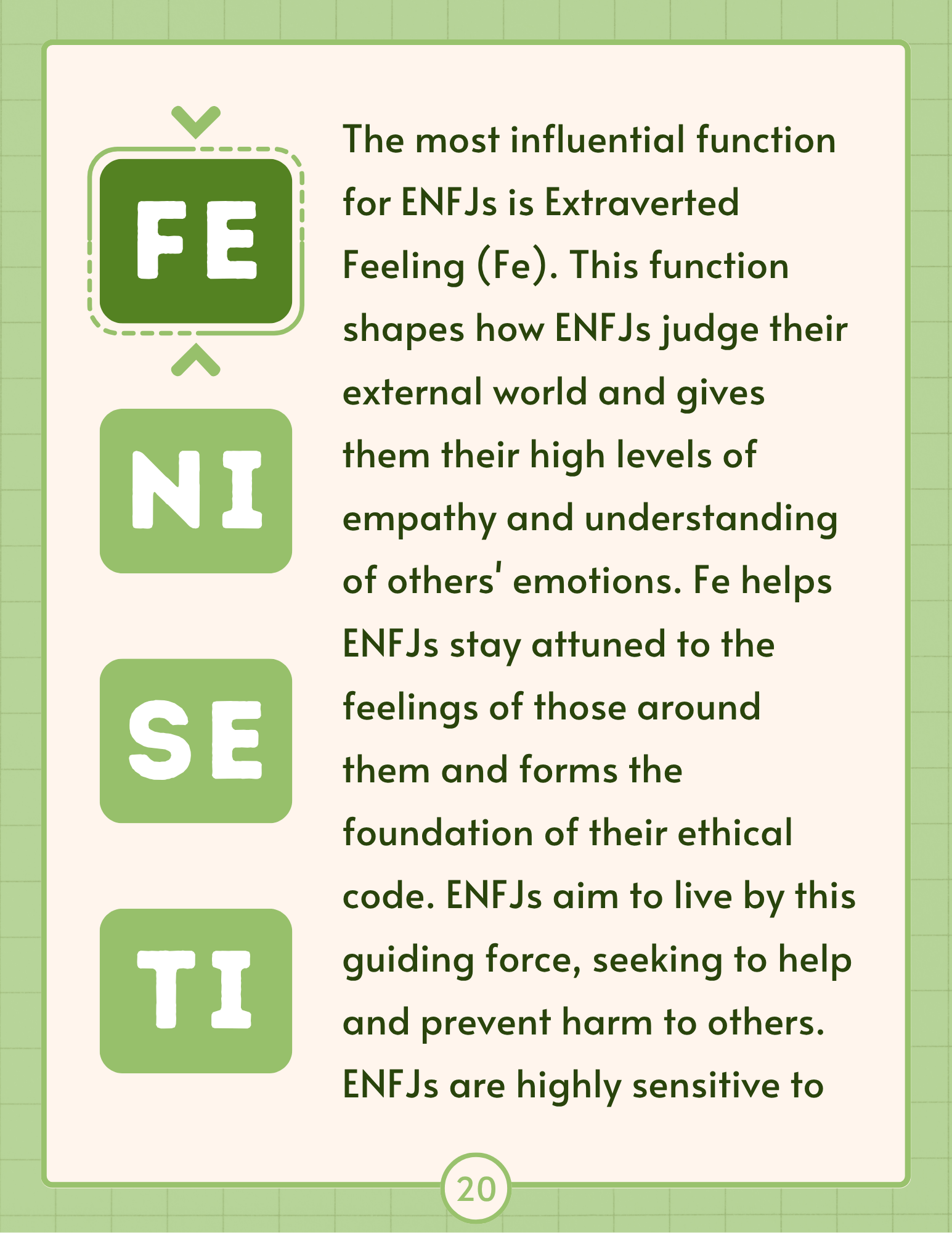
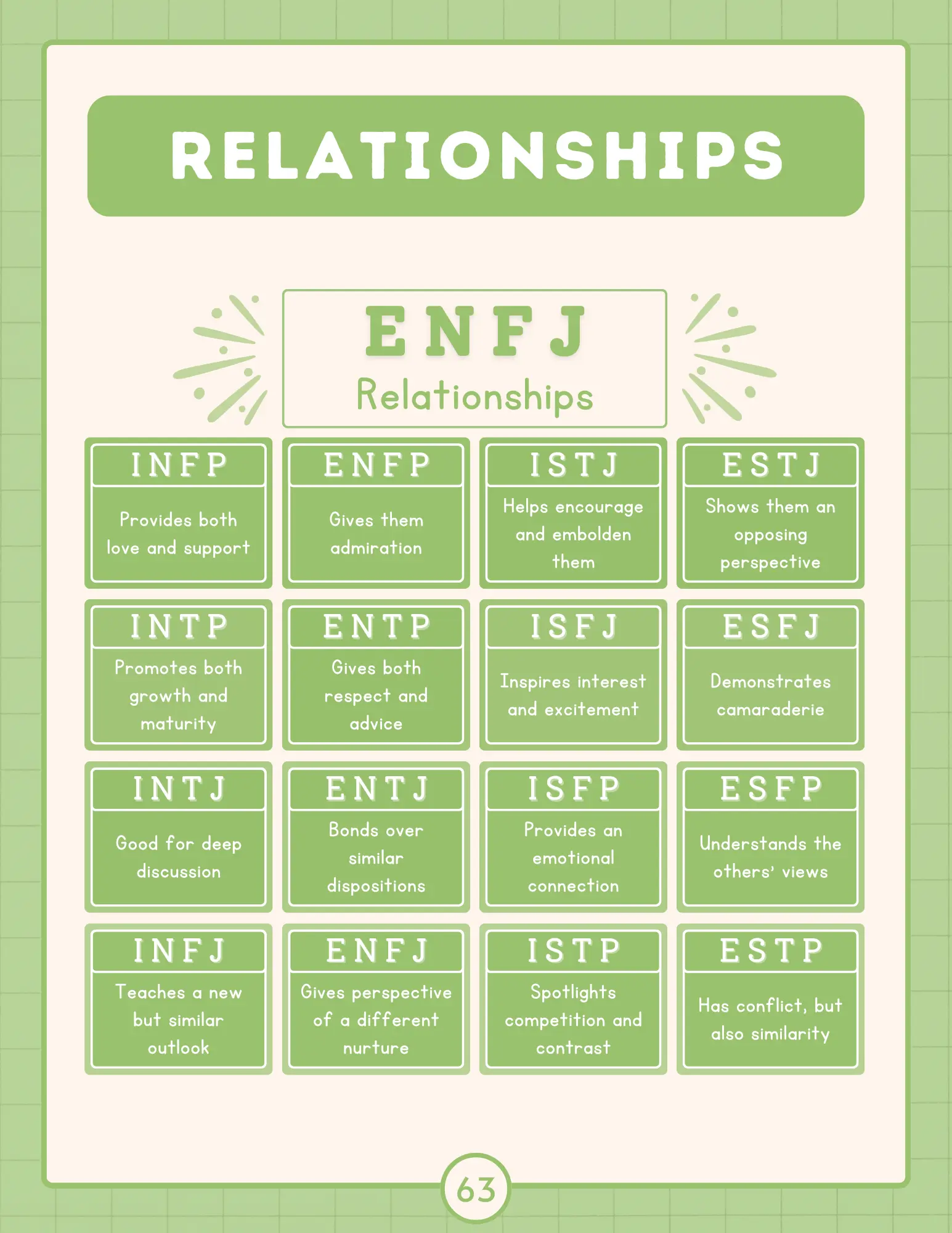
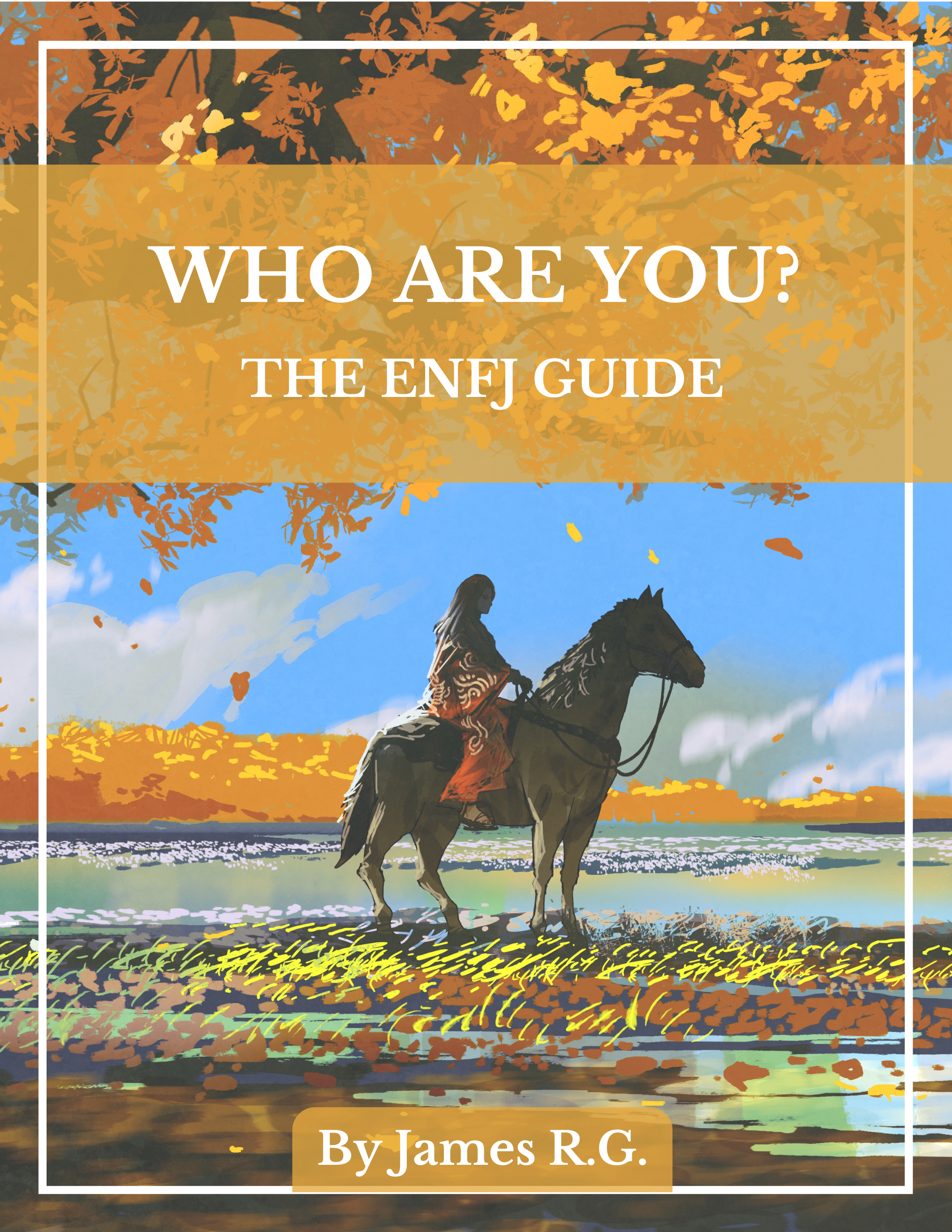
ENFJ Guide
Live it well
The practical companion. Once you understand how your mind works, the Guide helps you use it, in your relationships, your career, and the day-to-day work of growing into your type instead of fighting it.
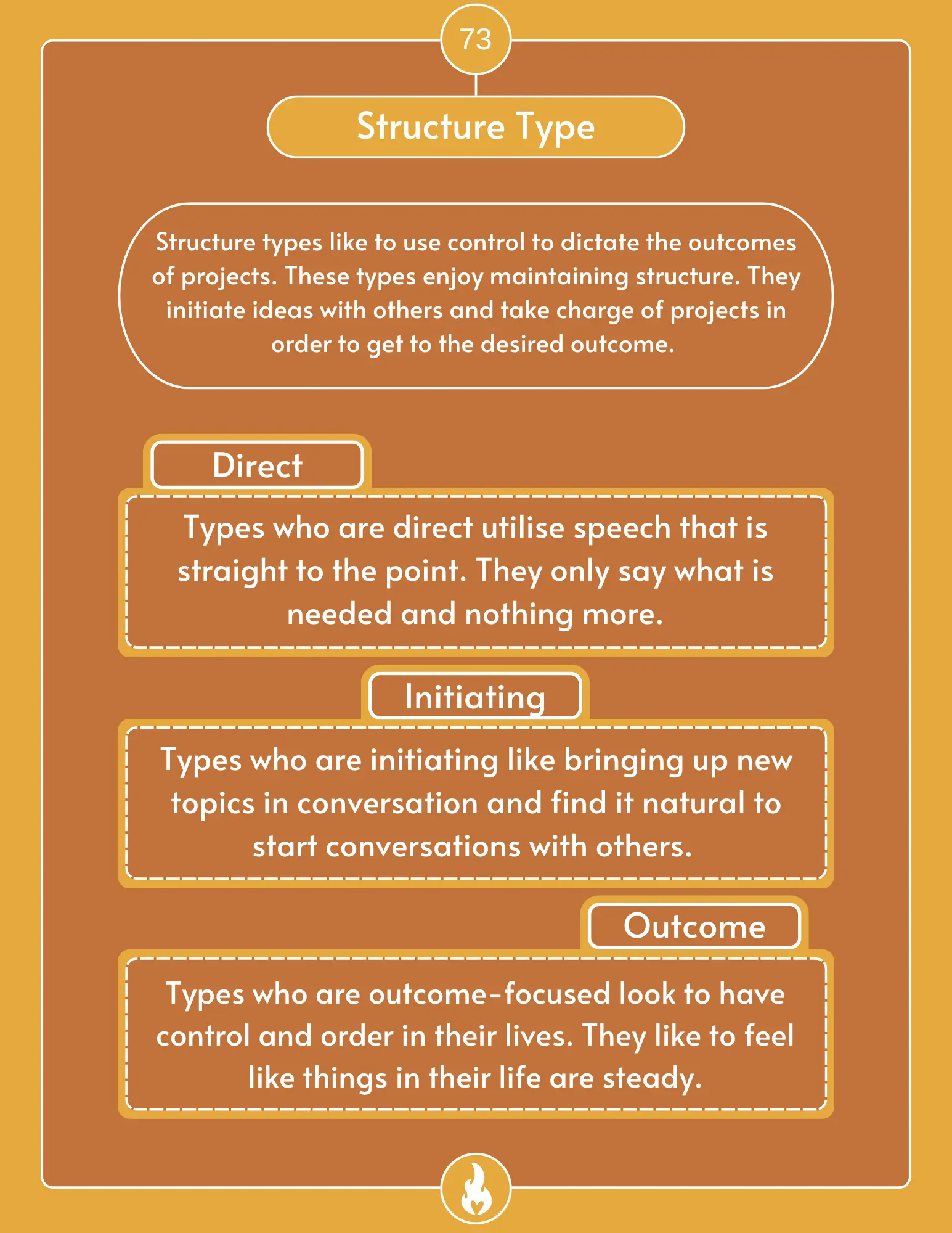
- Relationships and compatibility
- Careers that fit
- Growth and stress management
- Everyday ENFJ strategies
Not sure you are really an ENFJ?
ENFJ gets confused with INFJ and ESFJ all the time. If you want to be certain, a typing session will settle it.