ENFPThe Champion

So, you're an ENFP.

ENFPs tend to be guided by a strong sense of what could happen next, for themselves and for other people, and by high personal standards for acting in line with their values. In OnType's model, those two tendencies come from extraverted intuition (Ne) and introverted feeling (Fi), the two functions ENFPs use most.

  • TemperamentIdealist (NF)
  • Interaction styleStarter
  • Leads withNe + Fi

What do temperament and interaction style mean?

Illustration of the ENFP character
  • NeHero
  • FiParent
  • TeChild
  • SiAspirational

Start here

What an ENFP is often like

Many ENFPs notice possibilities and where things might lead, hold themselves to their own standards of what is good, and like to get new things moving with other people. None of this is a rule. People of the same type can look quite different, especially with age and experience.

Planning ahead

Seeing where things could lead

Before a change at work or home, an ENFP may quickly picture several ways it could play out, including how it could affect the people involved.

Extraverted intuition (Ne): foresight and a sense of what others want

Holding a standard

Trying to act in line with their values

ENFPs may hold themselves to a high personal standard and feel uneasy when what they are doing doesn't match what they believe is right.

Introverted feeling (Fi): responsible morals and self-worth

A natural strength

Listening to many views

ENFPs often listen to a range of views before deciding what to believe. In this model it is a strength that can start out overconfident and matures with practice.

Extraverted thinking (Te), the third function

At a glance

ENFP at a glance

A quick overview before you go deeper. These are tendencies within this model, not rules. Each point is shaded by the part of the type it comes from.

Strengths

  • Seeing possibilities and what others want (Ne Hero)
  • Acting in line with their values (Fi Parent)
  • Listening openly to many perspectives (Te Child)
  • Getting people and projects started (Starter)

Struggles

  • Chasing new options before finishing one (Ne Hero)
  • Feeling guilty over ordinary mistakes (Fi Parent)
  • Feeling unsure about routine and self-care (Si Aspirational)
  • Holding others to high standards of goodness (Fe Critic)

With growth

  • Choosing an option and following it through (Ne Hero)
  • Being fair to themselves (Fi Parent)
  • Checking beliefs against reliable sources (Te Child)
  • Building steady habits (Si Aspirational)

Under stress

  • Getting stuck between too many options (Ni Nemesis)
  • Dismissing other people's feelings (Fe Critic)
  • Believing a story without testing it (Ti Trickster)
  • Wanting others to feel their hurt (Se Demon)

How the type is built

Four layers that make up an ENFP

Within this model, a type is more than four letters. The ENFP pattern comes from four layers working together. Each one explains a different kind of tendency, so it helps to keep them separate.

1 · Cognitive functions

What comes first

  • Ne
  • Fi
  • Te
  • Si

Ne tracks other people's wants and possible futures. Fi tracks personal values and self-worth. Te and Si complete the four functions an ENFP uses most.

2 · Cognitive attitudes

How each function is used

  • Hero
  • Parent
  • Child
  • Aspirational

The same function reads differently in different positions. Ne as Hero is confident and energizing to use. Si as Aspirational mixes insecurity with real room to grow.

3 · Interaction style

Starter

  • Informative
  • Initiating
  • Progression

ENFPs tend to start conversations and projects, share plenty of context, and keep things moving while involving others.

4 · Temperament

Idealist

  • Abstract
  • Affiliative
  • Interest

Like the other NF types, ENFPs tend to look toward the future and toward people, often asking whether others are being treated fairly.

Keep the layers apart when you read about ENFPs. An ENFP's ease in starting conversations comes from being an Initiating type rather than from any single function, and it doesn't mean they never need time alone.

Your cognitive functions

The eight processes behind the four letters

Within this model, an ENFP has eight cognitive functions arranged by attitude and level of awareness. The first four form the ego. The lower four receive less automatic attention and matter most for understanding blind spots and development. Select a function to see how its role changes for an ENFP.

Ne

Hero · position 1

Extraverted Intuition

  • “You want”
  • “You could”
  • “We will”

Ne tracks other people's wants and intentions, external possibilities and likely consequences. In the Hero position it is the ENFP's go-to way of solving problems and the function they use with the most awareness and optimism. This can make ENFPs quick to see possibilities, read what other people want, and anticipate where a situation could go.

How to work with it

A Hero function can be overused. Generate options freely, then choose one and follow it through before opening the next.

Ego · most consciousRead about Extraverted Intuition →

Fi

Parent · position 2

Introverted Feeling

  • “I feel good / bad”
  • “I am good”
  • “I value”

Fi covers personal feelings, values, morals and self-worth. The Parent is the most responsible attitude, and it takes more energy to use than the Hero. ENFPs may hold themselves to a high standard of personal goodness and try to make sure their actions match their values.

How to work with it

Keep your standards, and be as fair to yourself as you would be to a friend.

Ego · supportingRead about Introverted Feeling →

Te

Child · position 3

Extraverted Thinking

  • “We think”
  • “You are right”
  • “We know”

Te deals with external rationale, sources, rules, statistics, reputation and what other people consider correct. In the Child position it is used with natural optimism and energy, alongside the Hero. ENFPs may listen openly to many perspectives, but can be overconfident in beliefs they haven't verified, or focus more on narrative than on facts.

How to work with it

Keep listening widely, and refine your beliefs by checking them against reliable sources.

Ego · relaxed and playfulRead about Extraverted Thinking →

Si

Aspirational · position 4

Introverted Sensing

  • “I need”
  • “I should”
  • “I have to”

Si covers personal experience, the past, comfort, personal needs, duty, loyalty and routine. In the Aspirational position, insecurity exists alongside strong potential. ENFPs may feel unsure about what they should do, or worried about their health and comfort, while also wanting more discipline and stability.

How to work with it

Build small, consistent habits around health and routine. People who don't enable bad habits are especially helpful here.

Ego · aspirational edgeRead about Introverted Sensing →

Ni

Nemesis · position 5

Introverted Intuition

  • “I want”
  • “I will”
  • “I hope”
  • “I plan”

Ni is tied to personal wants, intention, goals, foresight and future direction. In the Nemesis position it becomes an area of worry and uncertainty. ENFPs may worry about what they really want and struggle to commit, sometimes getting stuck weighing too many possibilities.

How to work with it

Practise making a decision and sticking with it long enough to learn from it. Certainty tends to come from commitment rather than from more options.

Shadow · gatewayRead about Introverted Intuition →

Fe

Critic · position 6

Extraverted Feeling

  • “We feel”
  • “You are good”
  • “We appreciate”

Fe tracks other people's feelings, ethics, care and collective judgments about what is good or bad. In the Critic position it is doubly pessimistic, so it tends to start out as unrealistic criticism. ENFPs may hold others to an unrealistic standard of goodness or overlook other people's feelings. With development, this can become genuine wisdom about ethics.

How to work with it

Recognize that other people's feelings matter as much as yours, and hold everyone to a realistic standard.

ShadowRead about Extraverted Feeling →

Ti

Trickster · position 7

Introverted Thinking

  • “I think”
  • “I know”
  • “This makes sense”

Ti handles personal true-or-false judgment: whether an idea makes logical sense to you. In the Trickster position these areas receive little automatic attention. ENFPs may not automatically check the logic behind their beliefs, and truth can feel subjective or shaped by narrative. They may come across as disrespectful without meaning to.

How to work with it

Check whether a belief actually holds up logically. People strong in Ti can help test it.

ShadowRead about Introverted Thinking →

Se

Demon · position 8

Extraverted Sensing

  • “You need”
  • “You should”
  • “We have to”

Se is tied to the external present, physical reality, performance, practical skill and other people's sensory experience. In the Demon position these areas have very low awareness and can take on a strongly negative tone when activated. ENFPs may resent other people's comfort when they feel unprotected, and under strain may want those who hurt them never to forget it.

How to work with it

Work toward forgiving past hurt, and build the capacity to tolerate discomfort without passing it on.

Shadow · lowest awarenessRead about Extraverted Sensing →

Development

The four sides of the ENFP mind

In this framework, the eight functions can also be read as four sides of one mind. Each side opens through a gateway function and has a healthier and a less healthy way of being expressed. This is a model for thinking about development, not a diagnosis of anyone's behaviour.

Ego

ENFP

Gateway: Ne Hero · Ne, Fi, Te, Si

Where ENFPs spend most of their time. It matures as they take responsibility for the possibilities they pursue and for their values.

HealthyResponsibility
UnhealthyIrresponsibility

Subconscious

ISTJ

Gateway: Si Aspirational · Si, Te, Fi, Ne

Reached by working through Si insecurities with humility. Building steady habits and self-care can turn that fear into confidence.

HealthyConfidence & humility
UnhealthyPride & insecurity

Shadow

INFJ

Gateway: Ni Nemesis · Ni, Fe, Ti, Se

Often surfaces through worry, self-criticism or failure. Facing it with maturity is how the shadow's perspective becomes wisdom.

HealthyWisdom & maturity
UnhealthyFoolishness & immaturity

Superego

ESTP

Gateway: Se Demon · Se, Ti, Fe, Ni

The most opposed perspective. When they feel unprotected it may want to disrupt others' comfort. Forgiveness helps it become caring rather than bitter.

HealthyLove & forgiveness
UnhealthyHatred & vengeance

The type code on each side shows which type's ego that side is arranged like. It does not mean an ENFP turns into that type.

Practical growth

Four ways to develop your stack

Each suggestion connects to a specific ENFP function and attitude. They are practical starting points within the model, not rules for every ENFP.

  1. Build steady habits

    Si Aspirational is tied to personal needs, duty and past experience. Build small, consistent habits around health and routine. People who don't enable bad habits are especially helpful here.

  2. Be fair to yourself

    Fi Parent is tied to personal values and self-worth. Keep your standards, and be as fair to yourself as you would be to a friend.

  3. Check your sources

    Te Child is tied to outside rationale, sources and reputation. Keep listening widely, and refine your beliefs by checking them against reliable sources.

  4. Commit to a choice

    Ni Nemesis is tied to personal wants and future direction. Practise making a decision and sticking with it long enough to learn from it. Certainty tends to come from commitment rather than from more options.

Go deeper

The ENFP book

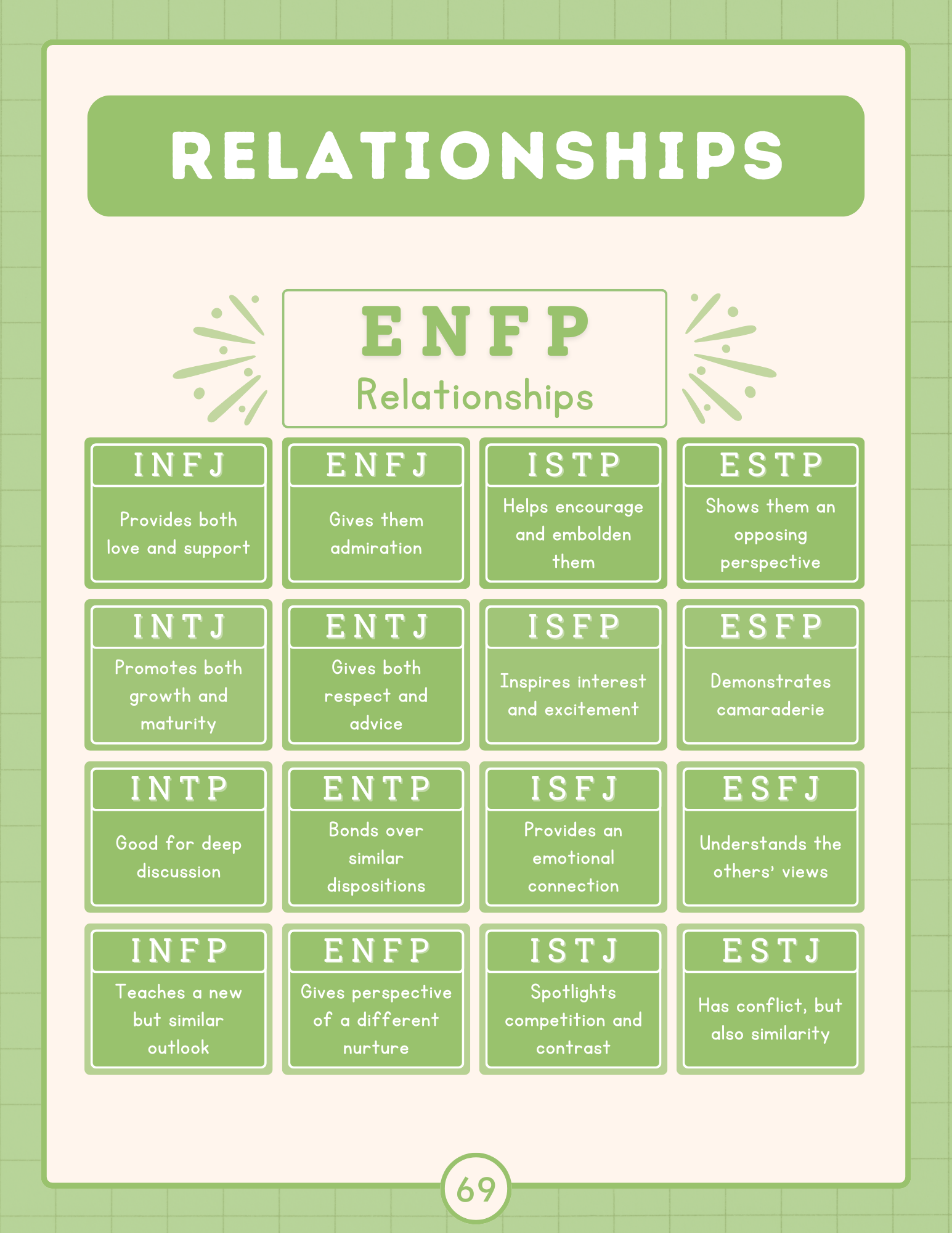
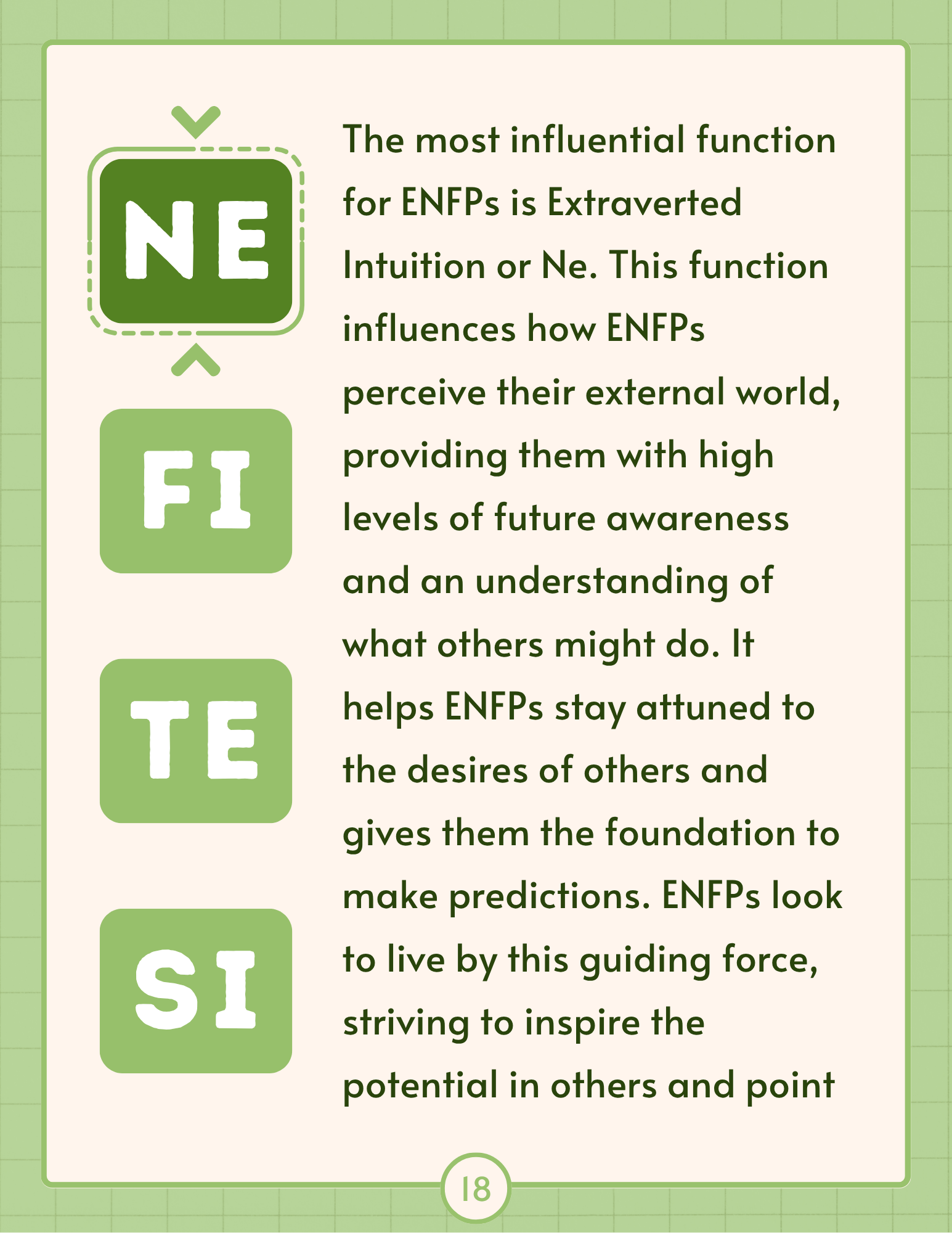
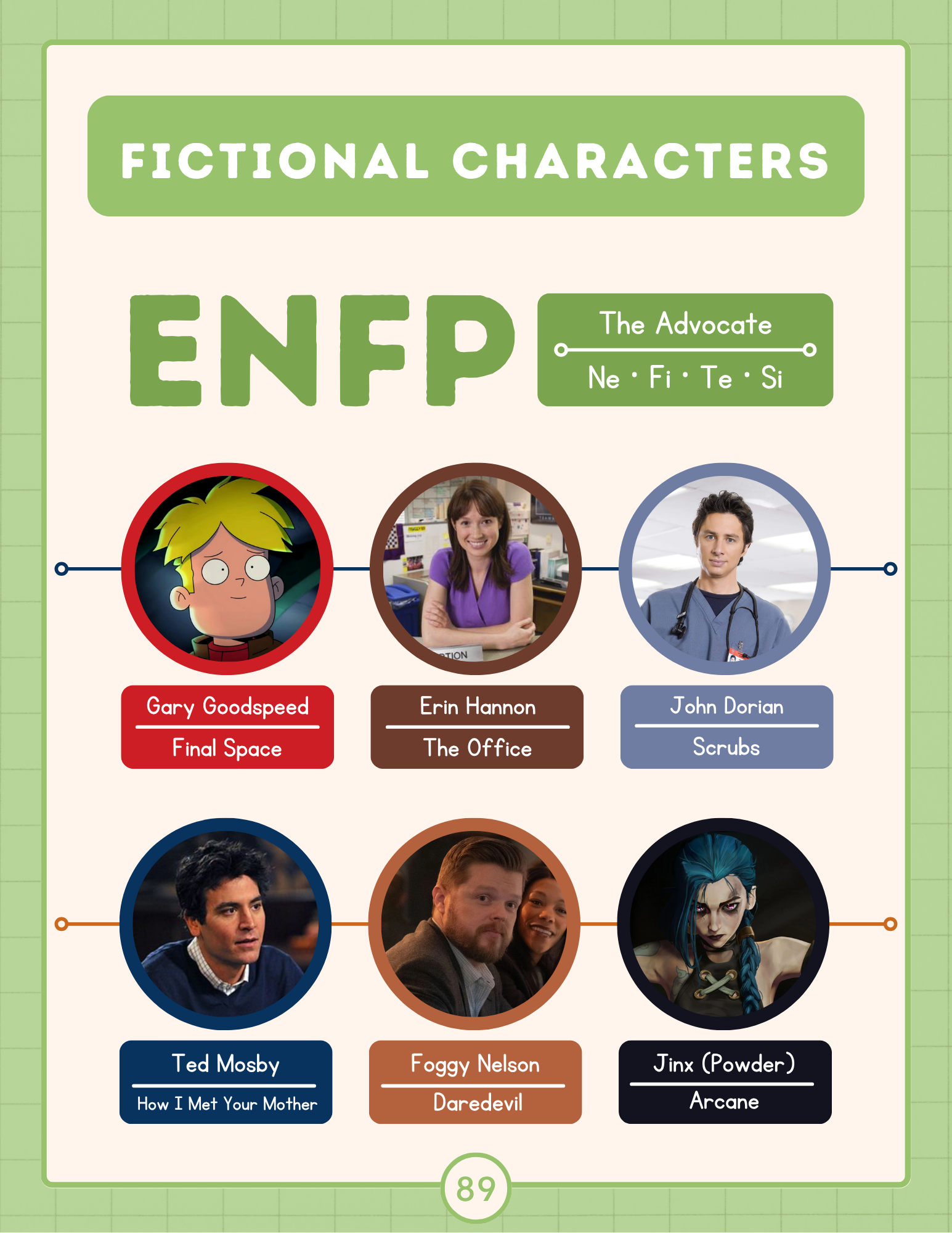
This page introduces the main ENFP patterns. ENFP Explained goes further into the function stack, development, relationships, career and how the different parts of the model interact.

ENFP Explained cover

Understand the stack

ENFP Explained

A detailed breakdown of the ENFP stack, including all eight functions, their attitudes, and how each position changes the way a function is expressed.

  • All eight cognitive functions
  • Function attitudes and positions
  • Strengths and blind spots
  • ENFP development patterns
ENFP Explained sample page ENFP Explained sample page ENFP Explained sample page
Get ENFP Explained

Not sure ENFP is your best fit?

ENFP can be confused with types that share some surface traits. The free test is a good first check. A typing session compares your functions, attitudes, temperament and interaction style to find which overall pattern fits best within the model.