FiHero · position 1
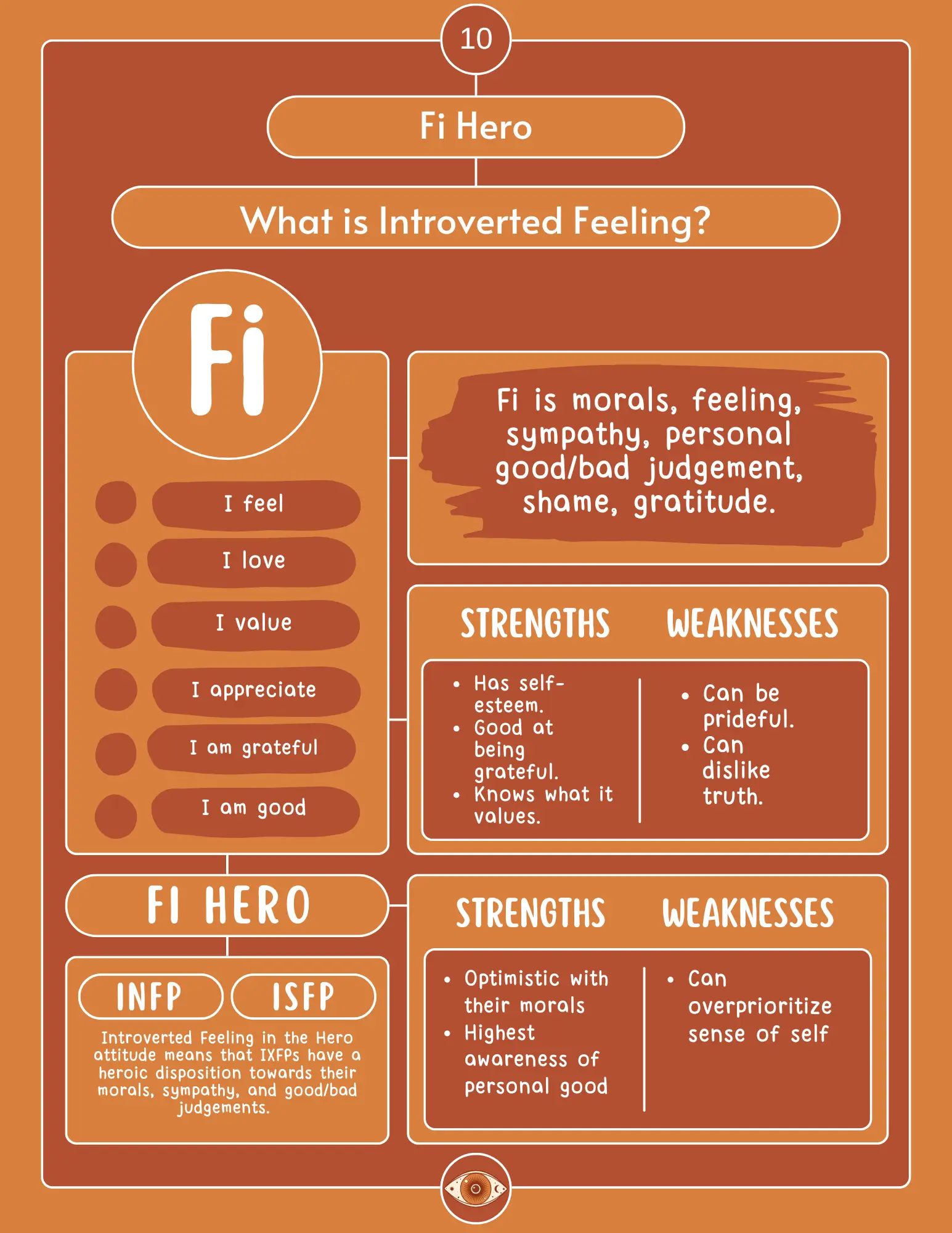
Introverted Feeling
- “I feel good / bad”
- “I am good”
- “I value”
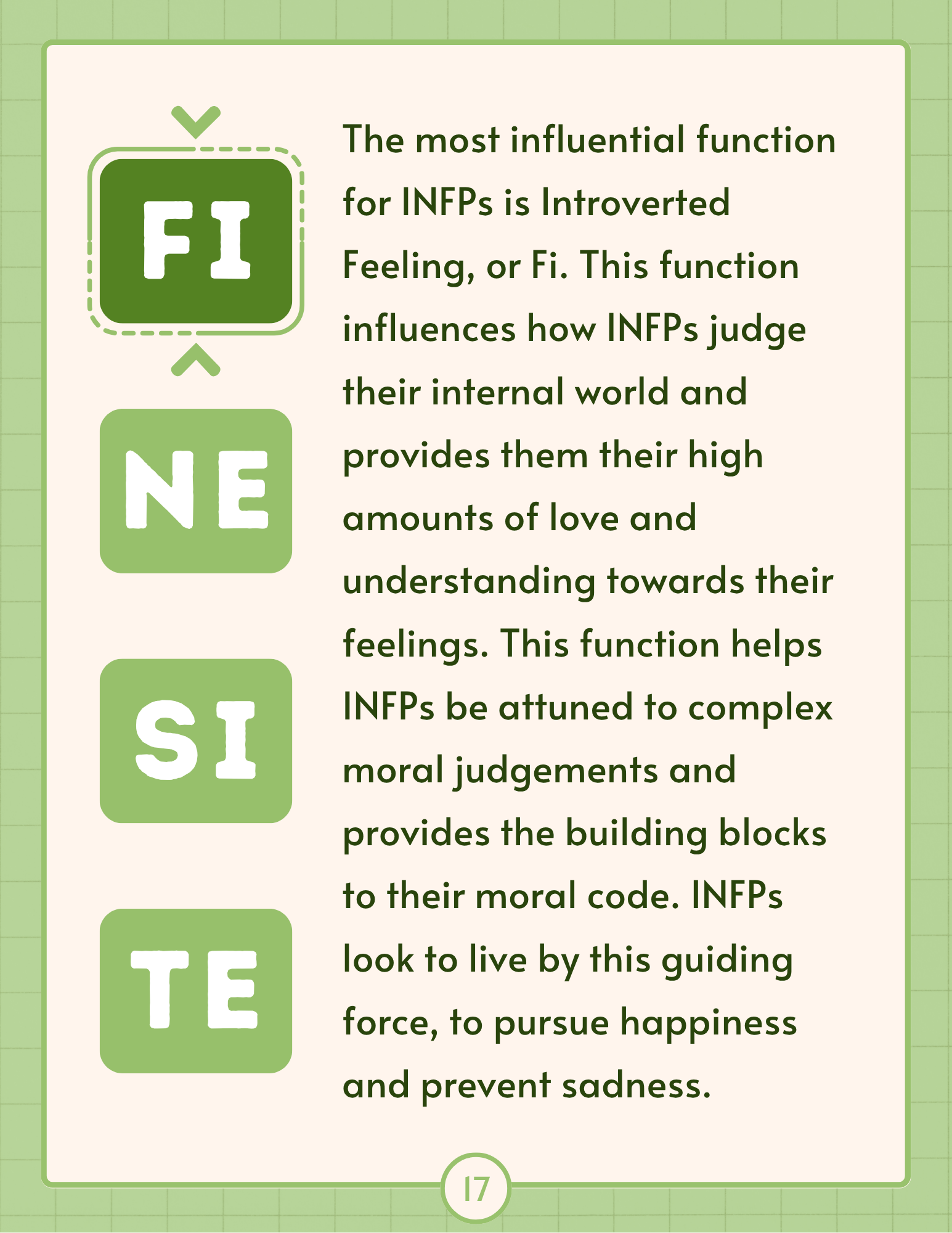
Fi covers personal feelings, values, morals and self-worth. In the Hero position it is the INFP's go-to way of solving problems and the function they use with the most awareness and optimism. This can make INFPs clear about what they value, sincere, and quick to know how they feel about a situation.
How to work with it
A Hero function can be overused. Stay true to your values, and remember that others may hold different values in good faith.
NeParent · position 2
Extraverted Intuition
- “You want”
- “You could”
- “We will”
Ne tracks other people's wants and intentions, external possibilities and likely consequences. The Parent is the most responsible attitude, and it takes more energy to use than the Hero. INFPs may be careful about consequences, good at anticipating what could happen to others, and ready to give thoughtful warnings.
How to work with it
Give warnings with care, and remember that anticipating a risk is different from knowing it will happen.
SiChild · position 3
Introverted Sensing
- “I need”
- “I should”
- “I have to”
Si covers personal experience, the past, comfort, personal needs, duty, loyalty and routine. In the Child position it is used with natural optimism and energy, alongside the Hero. INFPs may be naturally loyal and steadfast, but when underdeveloped can struggle with self-discipline or give attention to what doesn't deserve it.
How to work with it
Build self-discipline around the things that matter to you, and choose deliberately where your attention goes.
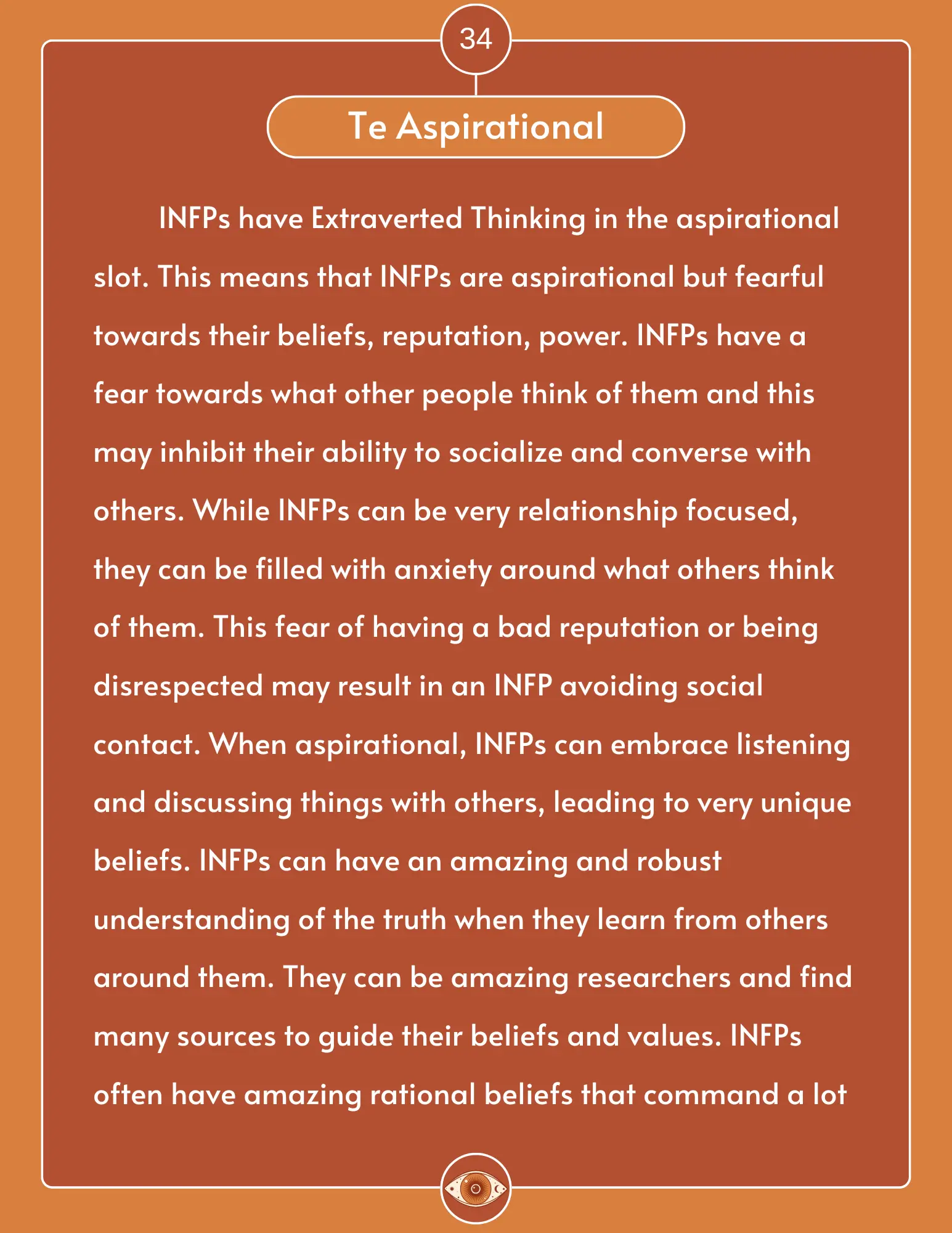
TeAspirational · position 4
Extraverted Thinking
- “We think”
- “You are right”
- “We know”
Te deals with external rationale, sources, rules, statistics, reputation and what other people consider correct. In the Aspirational position, insecurity exists alongside strong potential. INFPs may feel unsure about their beliefs and how others see them, while also wanting well-founded beliefs.
How to work with it
Seek input from others and refine your beliefs over time. Well-supported beliefs build confidence.
FeNemesis · position 5
Extraverted Feeling
- “We feel”
- “You are good”
- “We appreciate”
Fe tracks other people's feelings, ethics, care and collective judgments about what is good or bad. In the Nemesis position it becomes an area of worry and uncertainty. INFPs may worry about whether they are caring enough, or about whether other people are good.
How to work with it
Look for practical ways to help others, and remember that people with different values aren't worse people.
NiCritic · position 6
Introverted Intuition
- “I want”
- “I will”
- “I hope”
- “I plan”
Ni is tied to personal wants, intention, goals, foresight and future direction. In the Critic position it is doubly pessimistic, so it tends to start out as unrealistic criticism. INFPs may be critical of their own goals, hold themselves to an unrealistic standard of intention, or swing into hopelessness about the future. With development, this can become wisdom about their own plans.
How to work with it
Rely less on waiting for motivation. Commit to a realistic plan and build the discipline to follow it.
SeTrickster · position 7
Extraverted Sensing
- “You need”
- “You should”
- “We have to”
Se is tied to the external present, physical reality, performance, practical skill and other people's sensory experience. In the Trickster position these areas receive little automatic attention. INFPs may not notice when they are making others uncomfortable, and practical things like appearance or mechanical tasks may get little attention.
How to work with it
Ask how others are experiencing a situation, and learn from people strong in Se about practical and physical skills.
TiDemon · position 8
Introverted Thinking
- “I think”
- “I know”
- “This makes sense”
Ti handles personal true-or-false judgment: whether an idea makes logical sense to you. In the Demon position these areas have very low awareness and can take on a strongly negative tone when activated. INFPs may lose respect for themselves or others when they feel unvalued, which can lead to harsh or destructive thinking.
How to work with it
Remember that you are inherently respectable, whether or not others show it. That makes it easier to respect others too.