E N F P
So, you're an ENFP.
The Champion
ENFPs lead with Extraverted Intuition (Ne), which in this model tracks external possibilities, other people's wants and intentions, and possible futures. Introverted Feeling (Fi) Parent supports it with a more responsible approach to personal values, morals, and self-worth. As Starter types, ENFPs also tend to initiate and communicate informatively while keeping situations moving.
Ne · Fi · Te · Si

ENFP at a glance
A quick overview before you go deeper. These are tendencies within this model, not rules. They come from the ENFP's functions, cognitive attitudes, temperament, and interaction style.
Strengths
- Exploring multiple possibilities
- Reading what other people may want
- Responsible personal values
- Initiating ideas and conversations
Struggles
- Uncertainty about one personal direction
- Overlooking logical inconsistencies
- Under-verifying beliefs or sources
- Feeling unsure about routine or duty
With growth
- Choosing among competing possibilities
- Testing beliefs before accepting them
- Building consistent personal routines
- Balancing values with outside information
Under stress
- Getting stuck between too many possibilities
- Becoming harsh about other people's values
- Relying on beliefs without enough logical checking
- Growing resentful about others' comfort or experiences
Your cognitive functions
The eight processes behind the four letters
Within this model, an ENFP has eight cognitive functions arranged by attitude and level of awareness. The first four form the ego. The lower four receive less automatic attention and are especially useful for understanding blind spots and development. Tap any function to see how its role changes for an ENFP.
Conscious stack
Shadow stack
Extraverted Intuition
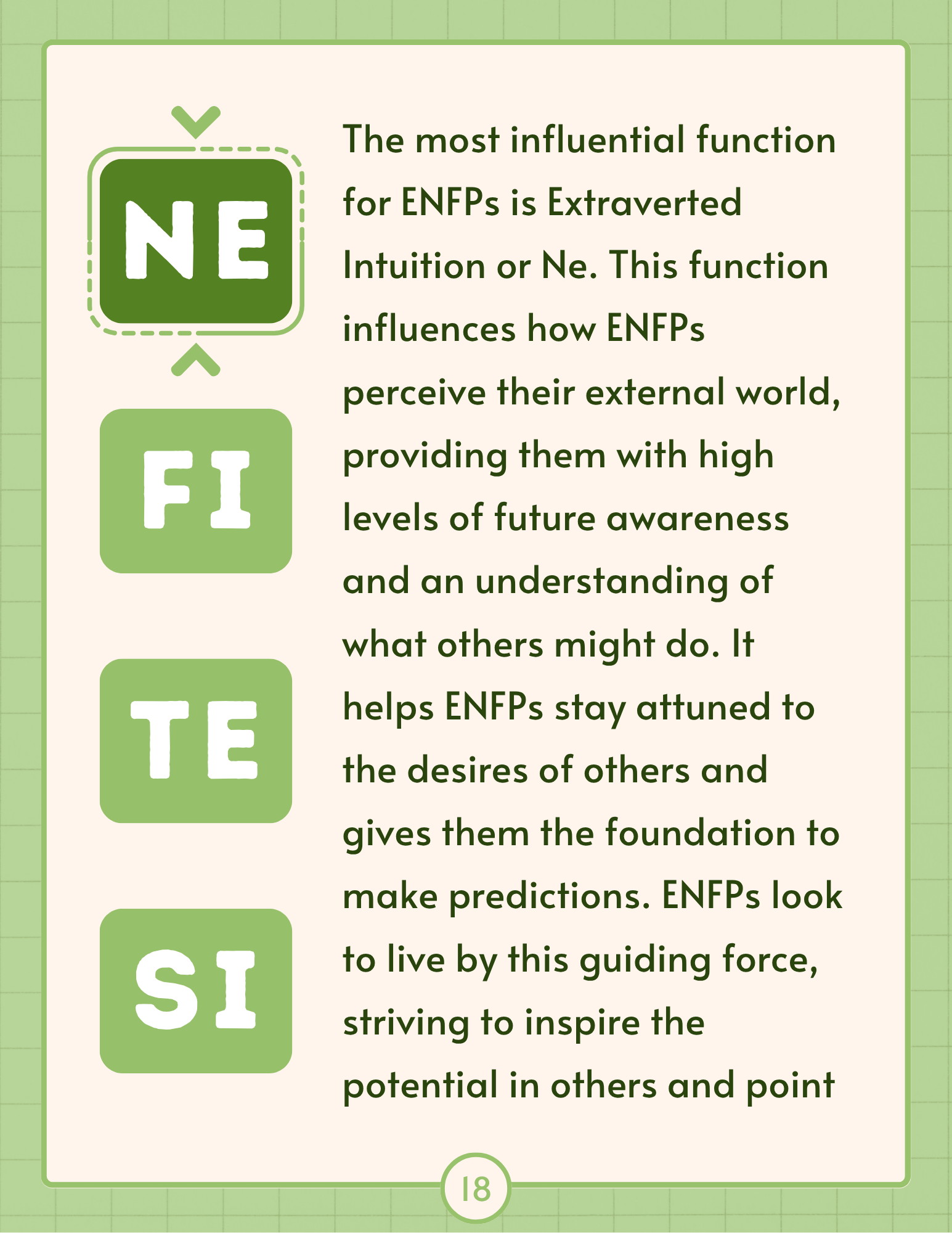
Ne tracks external possibilities, other people's wants and intentions, possible consequences, and the collective future. In the Hero position, it becomes the ENFP's most prominent everyday way of exploring information. ENFPs may therefore notice several possible directions at once and adapt quickly as new information changes what could happen.
Ne can become overconfident when every possibility receives equal attention. Explore alternatives, then decide which possibilities are actually relevant to the situation and what consequences they would create.
Position 1 of 8 · most conscious
Introverted Feeling
Fi covers personal feelings, values, morals, sympathy, self-worth, and personal judgments about what is good or bad. In the Parent position, ENFPs tend to approach these areas more responsibly and critically. This can make personal values an important check on which possibilities are worth pursuing and whether a choice fits the standards they want to live by.
Use Fi to evaluate what you actually value, but keep the standard realistic. A strong personal reaction can provide useful information without automatically making every judgment complete.
Position 2 of 8 · supporting
Extraverted Thinking
Te deals with outside rationale, other people's thinking, sources, rules, statistics, reputation, and collective judgments about what is correct. In the Child position, ENFPs may approach these areas with optimism and openness. They can listen to different perspectives and use outside information to form beliefs, although immature Te may accept a convincing narrative before it has been verified carefully enough.
Keep listening to outside perspectives, but verify important claims before building a belief around them. Check the source, compare reference points, and separate reputation from evidence.
Position 3 of 8 · relaxed and playful
Introverted Sensing
Si covers personal experience, long-term memory, bodily awareness, comfort, routine, duty, endurance, habits, and health. In the Aspirational position, insecurity exists alongside strong developmental potential. ENFPs may feel unsure about what they should remain committed to or how consistently they are meeting their own needs, while also having significant room to develop self-discipline and stability.
Develop Si through a few repeatable commitments to your own well-being. Consistent sleep, meals, health tasks, or weekly routines can build confidence in duty without requiring every part of life to become rigid.
Position 4 of 8 · aspirational edge of the ego
Introverted Intuition
Ni is tied to personal wants, decisions, goals, and future direction. In the Nemesis position, it becomes an area of worry and uncertainty. ENFPs may struggle to decide what they personally want when several external possibilities remain open, which can turn exploration into hesitation about choosing one path.
Practise making decisions even when more possibilities exist. Ask what you actually want, choose a direction with the information available, and revise it later if the evidence changes.
Position 5 of 8 · shadow
Extraverted Feeling
Fe covers other people's feelings, ethics, care, social norms, and collective judgments about what is good or bad. In the Critic position, ENFPs may hold other people to unrealistic standards of goodness or become too dismissive of feelings that do not match their own values. With development, this position can become wiser about ethical differences and the value of other people's emotional experience.
Hold yourself and other people to realistic ethical standards. A different value or emotional reaction is not automatically evidence that someone is uncaring or wrong.
Position 6 of 8 · shadow
Introverted Thinking
Ti handles personal true-or-false judgment, internal logic, accuracy, and independent reasoning. In the Trickster position, these areas receive relatively little automatic attention. ENFPs may not automatically notice when a belief does not fully follow from their own reasoning, especially when the idea already fits their values or has persuasive outside support.
Pause on important beliefs and ask whether the conclusion actually follows from the premises. Deliberate logical checking adds information that may not receive automatic attention.
Position 7 of 8 · shadow
Extraverted Sensing
Se covers the external present, physical reality, performance, and other people's experiences and comfort. In the Demon position, this function can take on a strongly negative tone when activated. Within this model, ENFPs may become resentful about how other people affect their immediate experience or comfort, especially when older frustrations have not been resolved.
Notice resentment before it becomes the lens through which you interpret the present. Address the underlying problem directly, protect reasonable boundaries, and avoid treating another person's discomfort as a way to resolve your own.
Position 8 of 8 · lowest awareness
Four ways to develop your stack
Each suggestion below connects to a specific ENFP function or attitude. They are practical starting points within the model, not rules for every ENFP.
Choose a direction
Ne Hero can keep several possibilities active while Ni Nemesis worries about choosing the wrong one. Practise making a decision once you have enough information instead of waiting for every alternative to disappear.
Build a few reliable routines
Si Aspirational develops through repeated attention to personal needs, duty, and self-discipline. A small number of consistent routines can build stability without removing flexibility from the rest of your life.
Verify what you believe
Te Child is open to outside rationale and sources, while Ti Trickster gives internal logical checking less automatic attention. For important claims, compare sources and ask whether the conclusion actually follows.
Use realistic ethical standards
Fe Critic can become too harsh about whether other people are good or caring enough. Leave room for different values and emotional responses before deciding what another person's behaviour means.
Go deeper
The ENFP books
This page introduces the main ENFP patterns. ENFP Explained goes further into the function stack, development, relationships, career, and how the different parts of the model interact.
ENFP Explained
Understand the stack
A detailed breakdown of the ENFP stack, including all eight functions, their attitudes, and how the different positions change the way each function is expressed.
- All eight cognitive functions
- Function attitudes and positions
- Strengths and blind spots
- ENFP development patterns
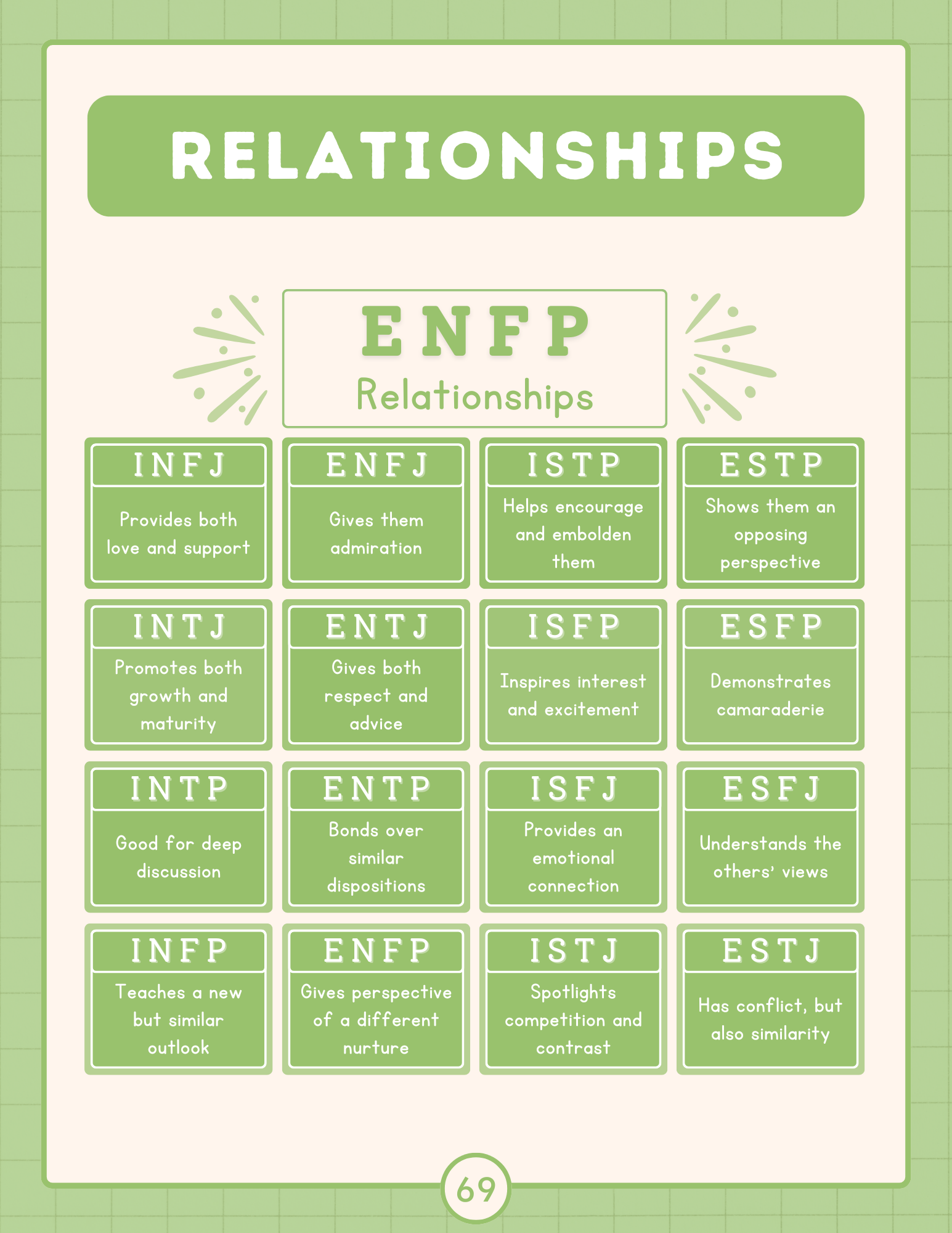
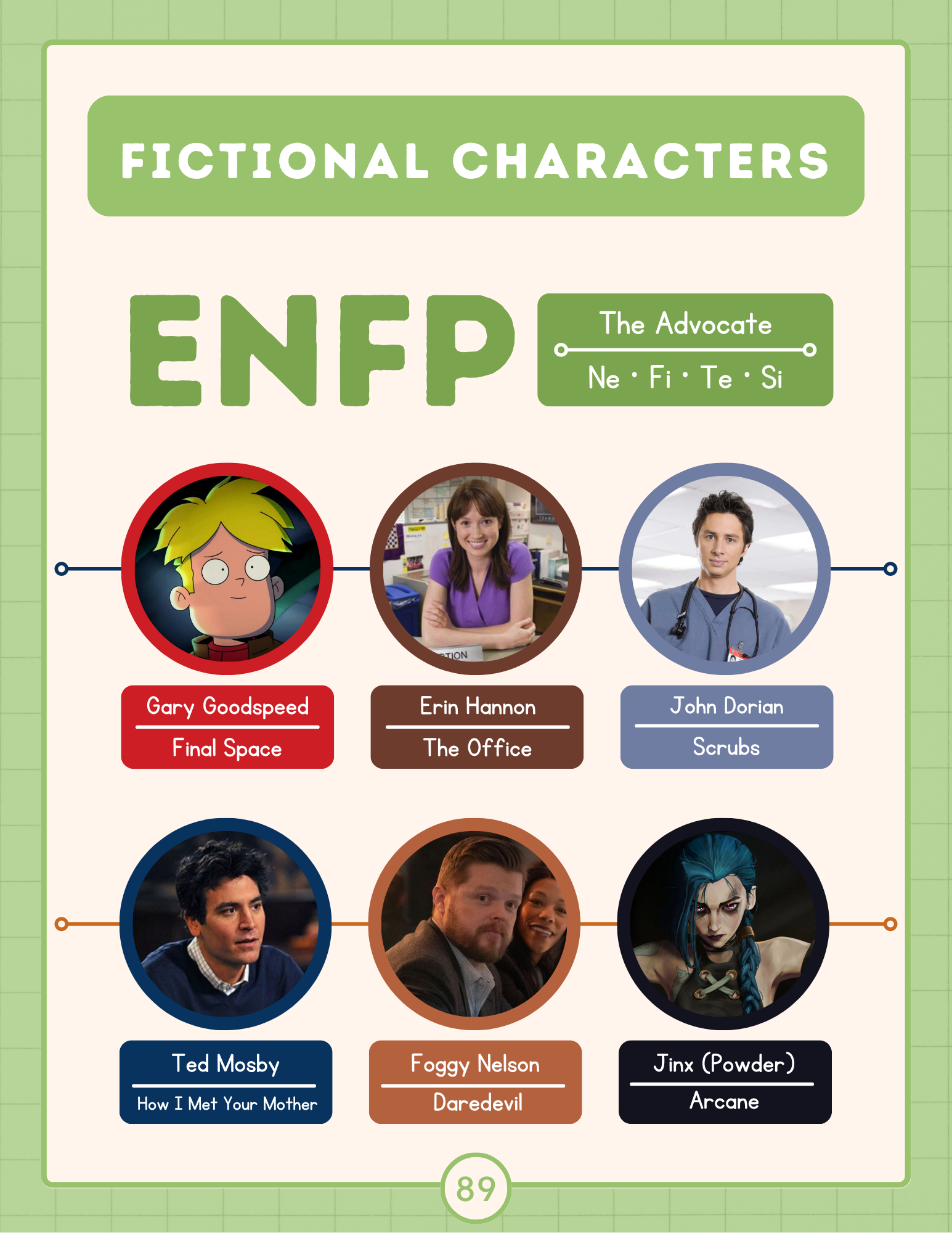
Not sure ENFP is your best fit?
ENFP can be confused with types that share similar surface traits. A typing session compares your functions, attitudes, temperament, and interaction style to identify which overall pattern fits best within the model.