I N F P
So, you're an INFP.
The Healer
Quiet on the outside, vivid on the inside. You move through the world with a deep inner compass that most people never see, and you feel things at a depth that can be both a gift and a weight. You are drawn to what is authentic, and you can tell when something is not.
Fi · Ne · Si · Te

INFP at a glance
A quick portrait before you go deeper. None of this is a box; it is a starting point for understanding how your mind tends to work.
Strengths
- Deep authenticity
- Rich inner world
- Creative, original thinking
- Compassion without pretense
Struggles
- Paralysis by idealism
- Avoiding conflict until it explodes
- Harsh self-criticism
- Difficulty with the mundane
At your best
- Turning feeling into art or action
- Holding space for what is real
- Gentle but unmovable on values
- Seeing people as they truly are
Under stress
- Withdrawing into yourself
- Lashing out with cold logic
- Feeling like nothing is good enough
- Losing motivation entirely
Your cognitive functions
The eight processes behind the four letters
Your type is not really four letters. It is an ordered stack of eight mental processes, each one more or less conscious than the next. The first four you use naturally. The last four are your shadow, and they mostly show up when you are stressed or pushed. Tap any function to see how it works in you.
Conscious stack
Shadow stack
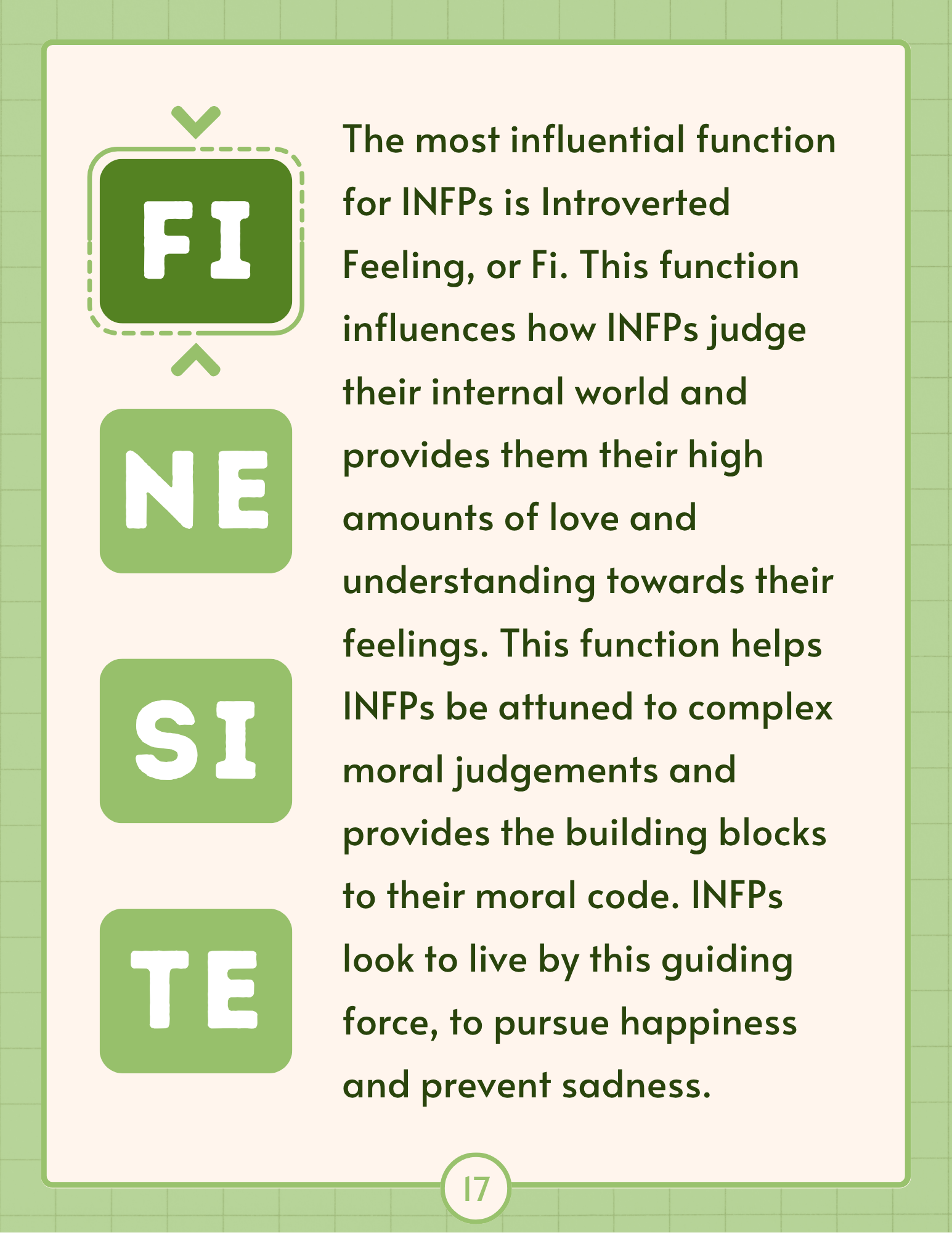
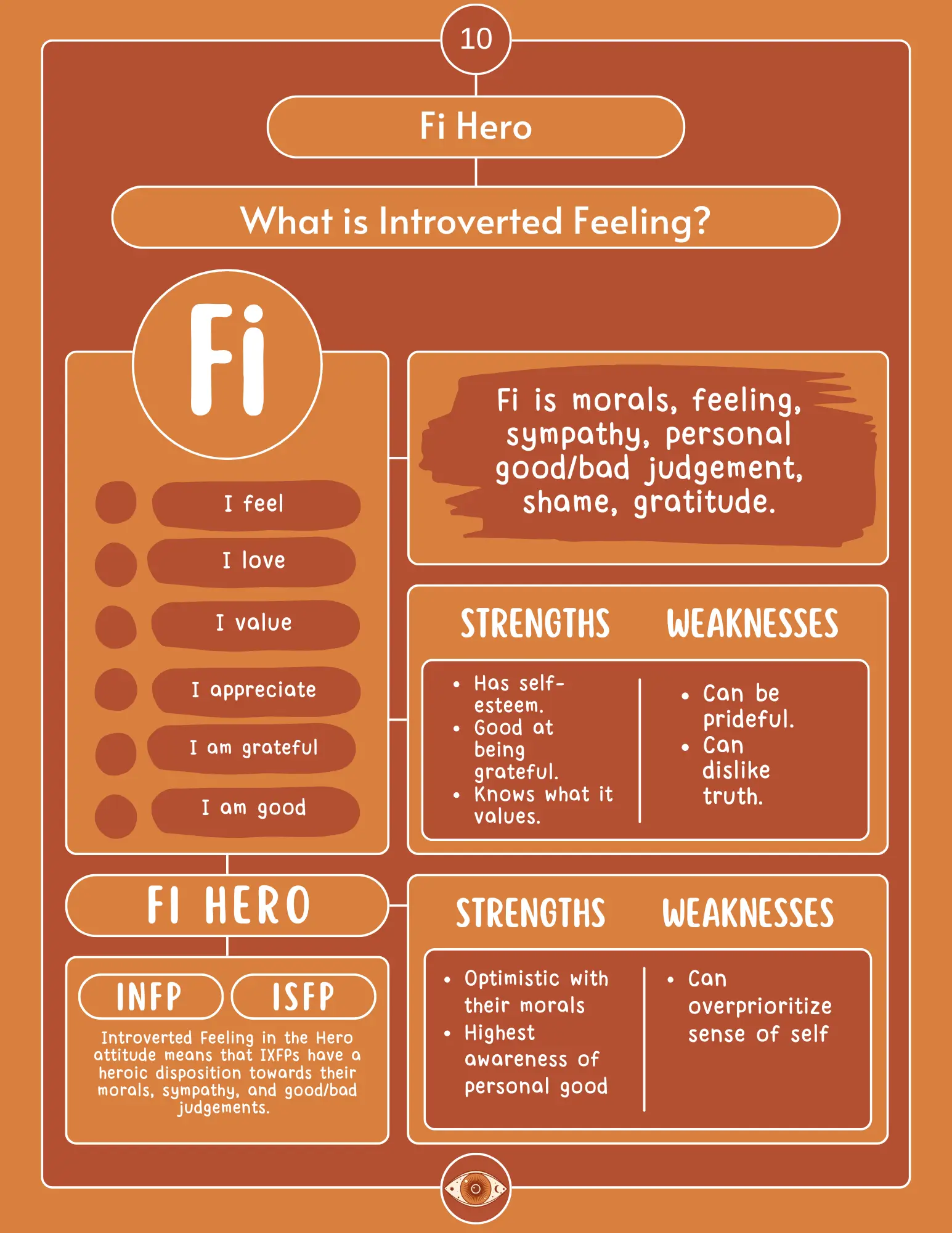
Introverted Feeling
Your lead process. You carry a deep, private value system that runs beneath everything you do. It is not about following rules or reading the room; it is about knowing, in your bones, what feels right and what does not. This is your compass. It makes you fiercely authentic, unusually empathetic in a one-on-one way, and almost impossible to push into something that conflicts with who you are.
Your values are real, but they need air. When you keep everything inside, people cannot meet you where you are. Practice saying what matters to you out loud, even imperfectly. It does not have to be polished to be honest.
Position 1 of 8 · most conscious
Extraverted Intuition
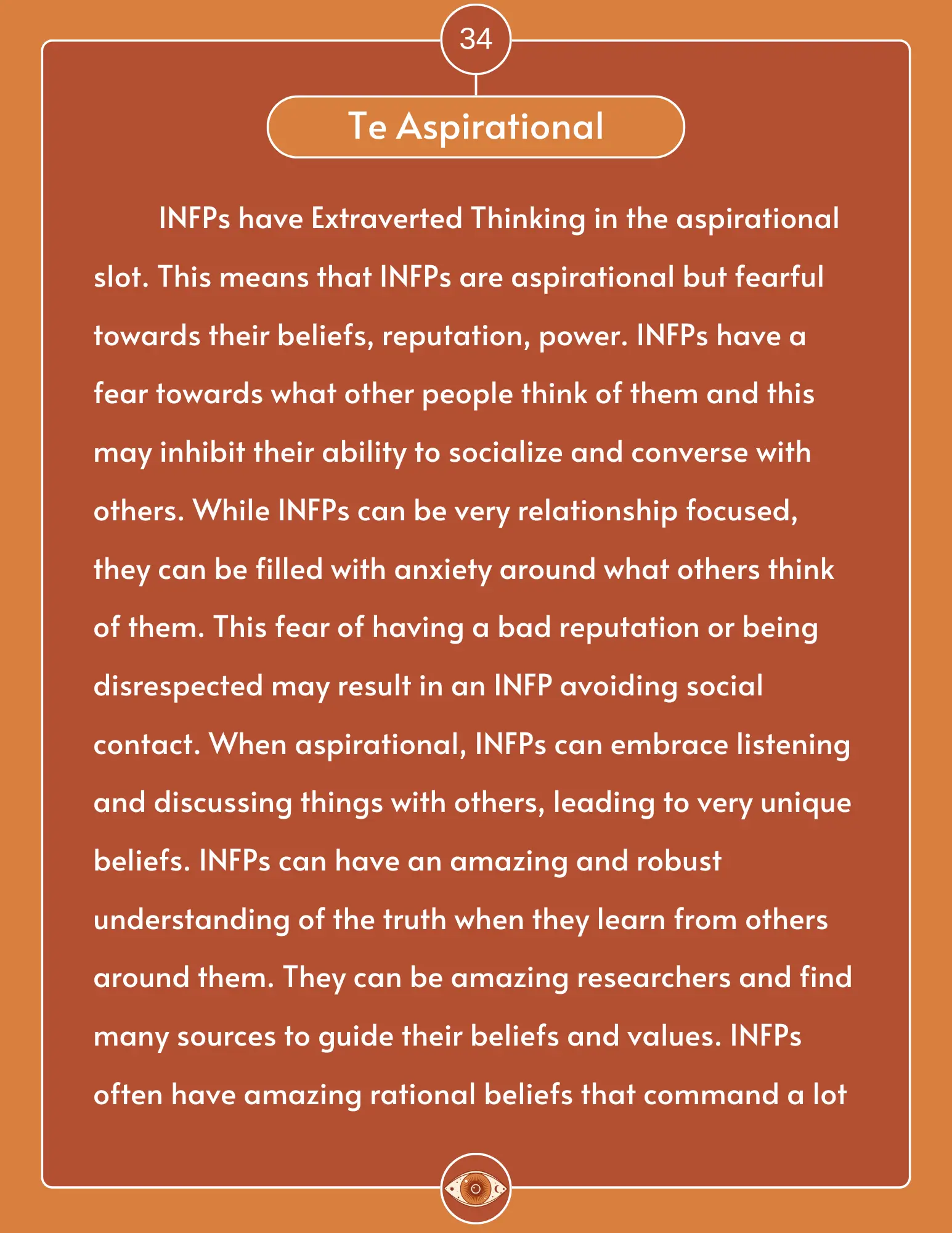
Your explorer. While your Fi knows what matters, your Ne sees possibilities everywhere. It connects dots other people miss, generates ideas faster than you can act on them, and gives you that restless, creative energy. It is why you can see multiple sides of almost anything, and why you sometimes struggle to commit to one path when you can imagine twelve.
Ne is a gift, but it needs a leash. Let it brainstorm freely, then check back with your Fi: which of these possibilities actually matters to me? That is how you go from dreaming to doing.
Position 2 of 8 · supporting
Introverted Sensing
Your nostalgic, comfort-seeking side. You have a rich relationship with the past: certain songs, places, textures, and memories carry enormous emotional weight for you. This function gives you a sense of personal continuity and a love of the familiar. When it is working well, it grounds you. When it takes over, it can pull you into loops of replaying what went wrong.
Enjoy the nostalgia, but watch for the rumination. If you are replaying a painful memory for the fifth time and it is not teaching you anything new, that is Si looping with Fi. Break the loop: move your body, call someone, change the environment.
Position 3 of 8 · relaxed and playful
Extraverted Thinking
Your growth edge. Organizing, structuring, measuring, producing tangible results in the external world: none of this comes naturally. You can feel clumsy with logistics, overwhelmed by systems, or paralyzed by the gap between your inner vision and the practical steps needed to get there. Under stress, it can erupt as harsh, cutting criticism that sounds nothing like you.
Start small. A single list, one deadline, one concrete step. You do not need to become a productivity machine; you just need enough structure to get the thing that matters to you out of your head and into the world.
Position 4 of 8 · least conscious, most aspirational
Extraverted Feeling
The anxious mirror of your feeling. Where your Fi is a quiet, private compass, Fe under stress makes you suddenly hyperaware of how others see you. Am I being too much? Too little? Do they actually like me? It can push you into people-pleasing that goes against your own values, or make you resentful when you feel socially pressured to perform emotions you do not actually feel.
When you catch yourself performing for the room instead of being yourself, pause. That is your Fe shadow, not your real self. Your Fi already knows the answer: go back to what you actually feel, not what you think they want.
Position 5 of 8 · shadow
Introverted Intuition
A harsh judge of meaning and direction. Where your Ne plays with possibilities, Ni under stress narrows into a single dark conclusion: this will never work, this path leads nowhere, there is no point. It can make you feel stuck in a fatalistic certainty that contradicts your natural openness and hope.
If you find yourself convinced that one grim outcome is inevitable, that is your critic talking, not your intuition. Return to your Ne: what are three other ways this could go? The openness is where your real clarity lives.
Position 6 of 8 · shadow
Extraverted Sensing
Your awkward relationship with the physical present. You can miss what is right in front of you: the practical detail, the immediate physical reality, the thing that needs doing now. You might bump into things, lose track of your surroundings, or ignore your body's signals until they become impossible to ignore. The external, sensory world can feel like a foreign language.
You will never be a pure Se type, and that is fine. But build small sensory anchors into your day: a walk without headphones, cooking something from scratch, noticing one physical detail in every room you enter. It pulls you out of your head gently.
Position 7 of 8 · shadow
Introverted Thinking
Your deepest blind spot. Under extreme stress, this can surface as obsessive internal analysis: tearing apart your own logic, finding contradictions in everything, or building airtight arguments for why you are fundamentally broken. It is cold, relentless, and it does not feel like you. Alternatively, it can make you dismiss all logical frameworks as irrelevant, leaving you without any structure to hold onto.
If you are stuck in a spiral of self-dissection that feels clinical and cruel, that is your demon function, not the truth about you. Stop analyzing and do something kind for yourself. You cannot think your way out of this one; you have to feel your way back.
Position 8 of 8 · least conscious
A few things that actually help
Not a life plan, just the handful of shifts that tend to make the biggest difference for INFPs. Each one comes straight from your function stack.
Close the gap between feeling and doing
Your inner world is rich, but it stays inner. The thing you care about most still needs a first step, a rough draft, a phone call. Imperfect action beats perfect intention every time.
Stop replaying the tape
Your Si loves to revisit the past, and your Fi colours it with emotion. When a memory stops teaching you something and starts just hurting, that is a loop, not reflection. Move your body and break the circuit.
Say what you need before you resent people for not knowing
You feel deeply and expect others to sense it. They usually cannot. Naming your needs out loud is not needy; it is the only way the people who care about you can actually show up for you.
Give yourself permission to be ordinary sometimes
Your idealism sets an impossible bar. Not every day needs to be meaningful, not every project needs to be a masterpiece, and not every feeling needs to be resolved. Some things are allowed to just be okay.
Go deeper
The INFP books
This page is the surface. Both books go all the way down, from the cognition behind your type to how it plays out in your relationships, your work, and your growth.
INFP Explained
Understand yourself
The complete breakdown of the INFP mind. Every function in your stack, how they work together, and why you feel, create, and withdraw the way you do. If this page made something click, this is where the whole picture comes together.
- All eight functions in depth
- How your stack shapes you
- Strengths and blind spots
- What drives INFP behaviour
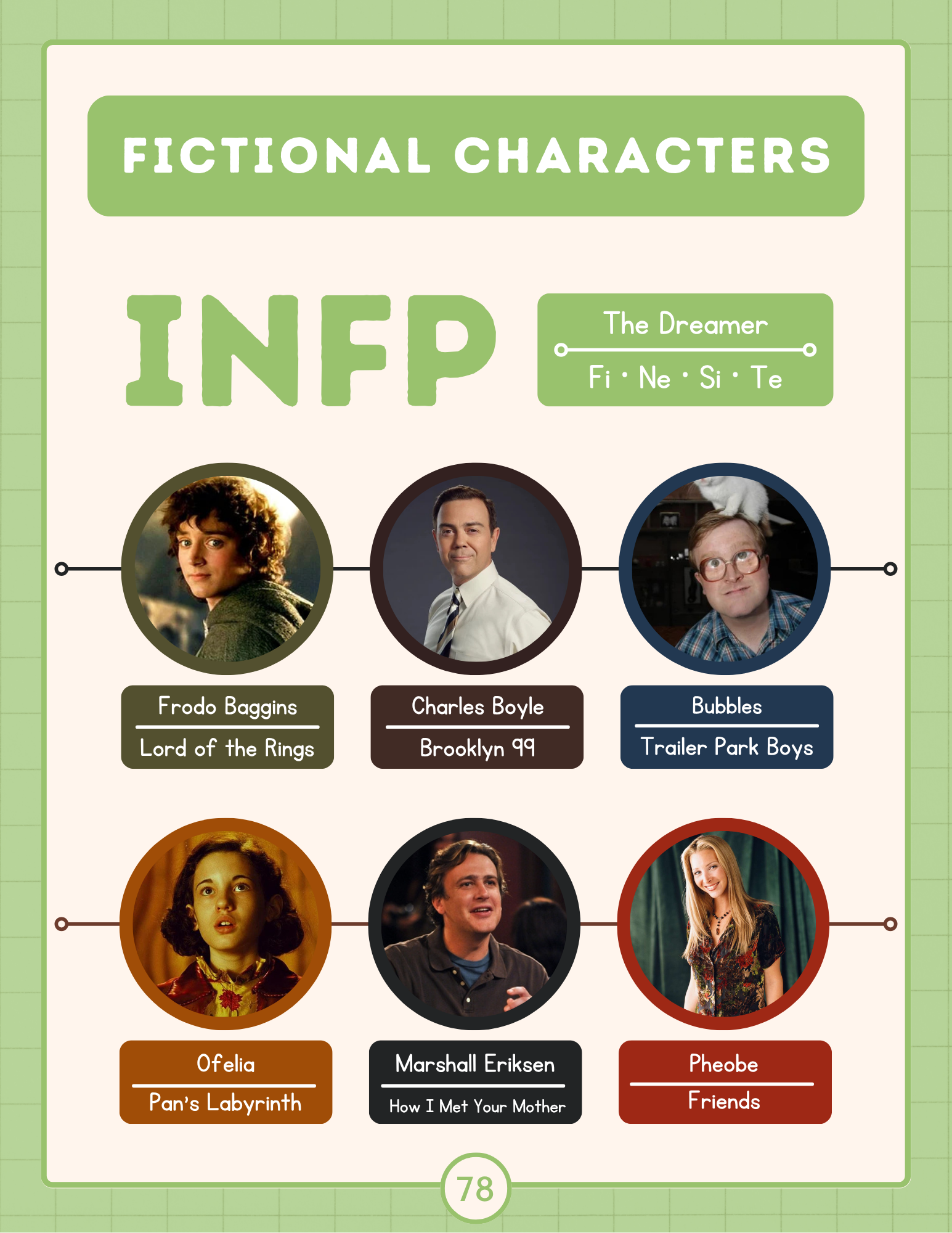
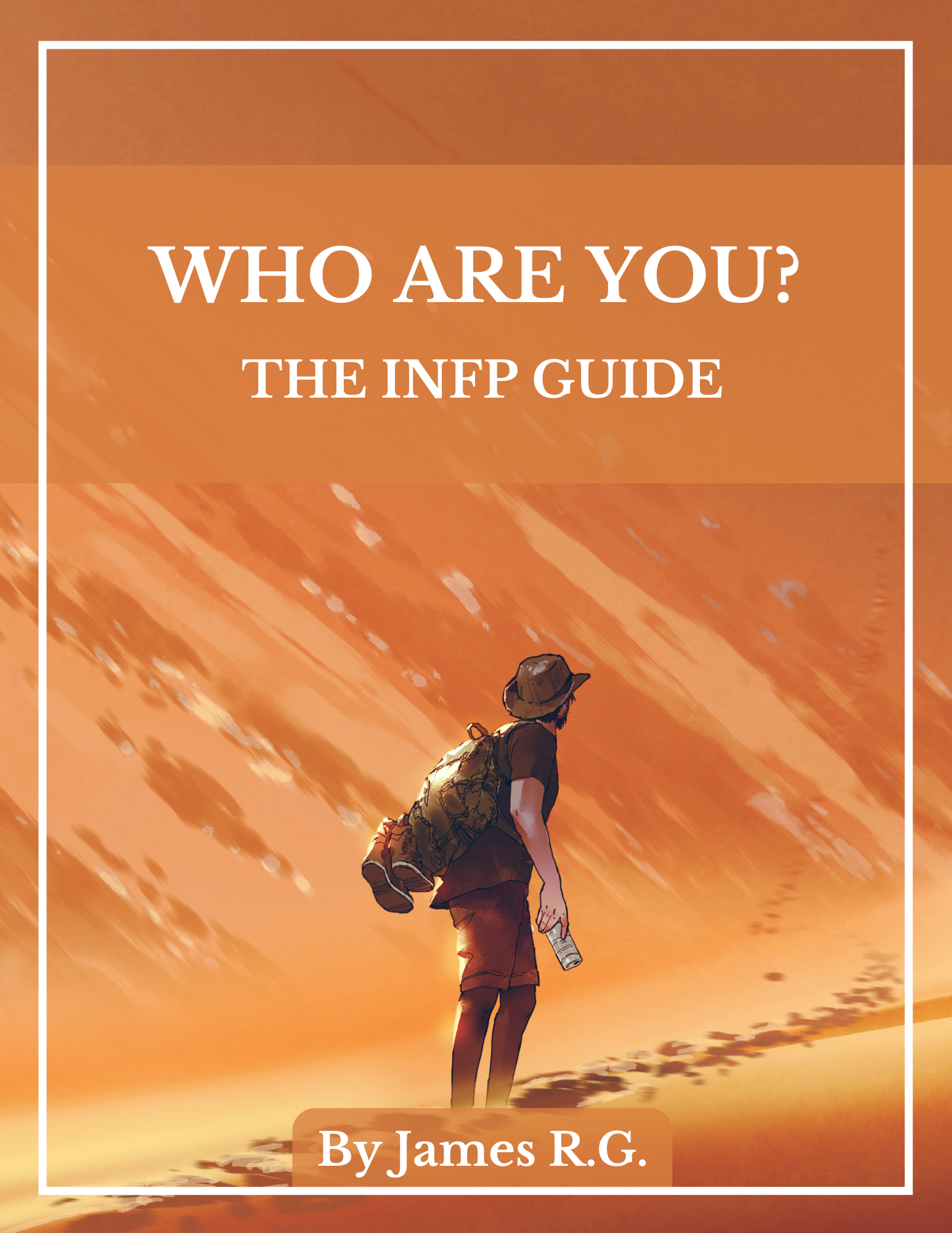
INFP Guide
Live it well
The practical companion. Once you understand how your mind works, the Guide helps you use it, in your relationships, your career, and the day-to-day work of growing into your type instead of fighting it.
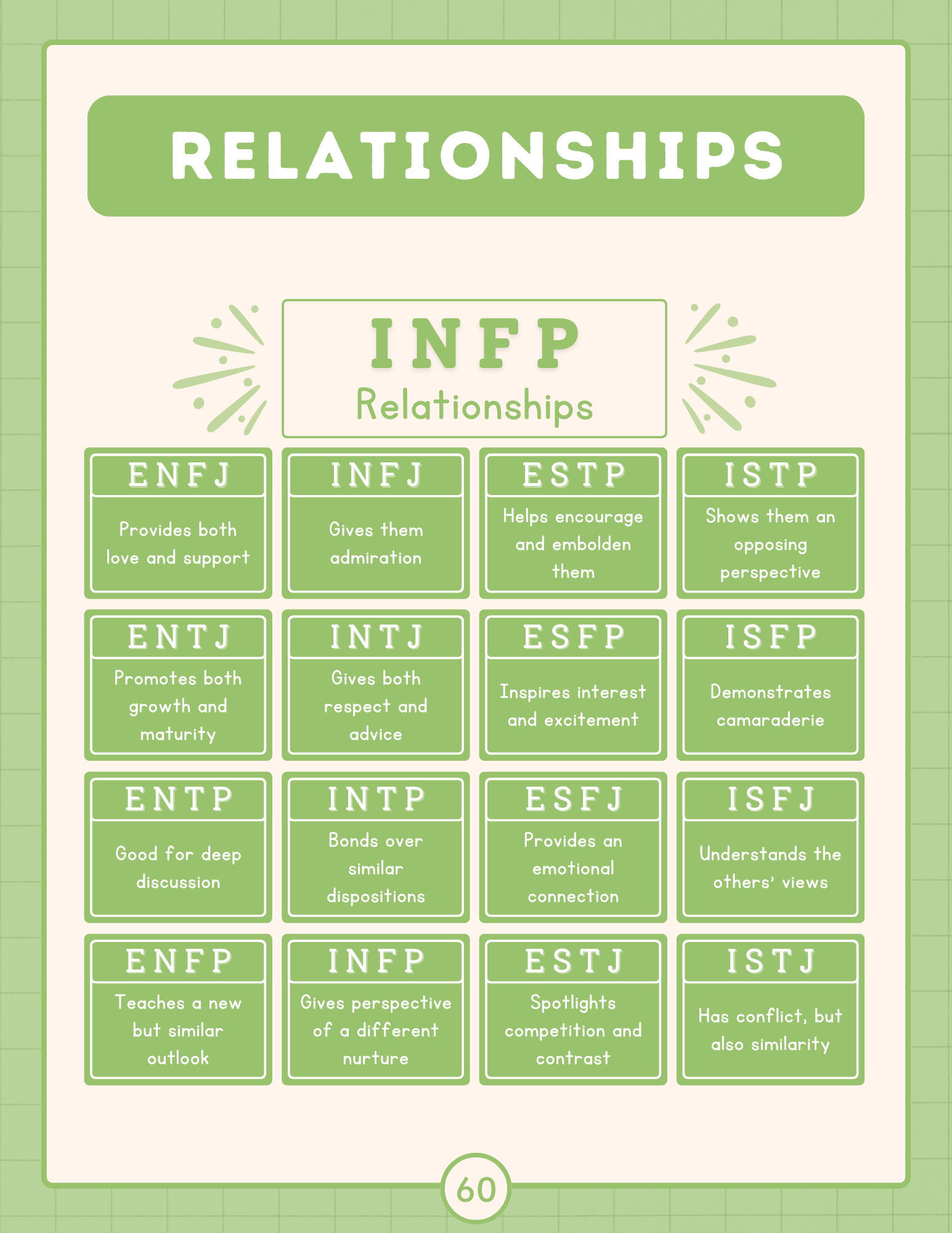
- Relationships and compatibility
- Careers that fit
- Growth and stress management
- Everyday INFP strategies
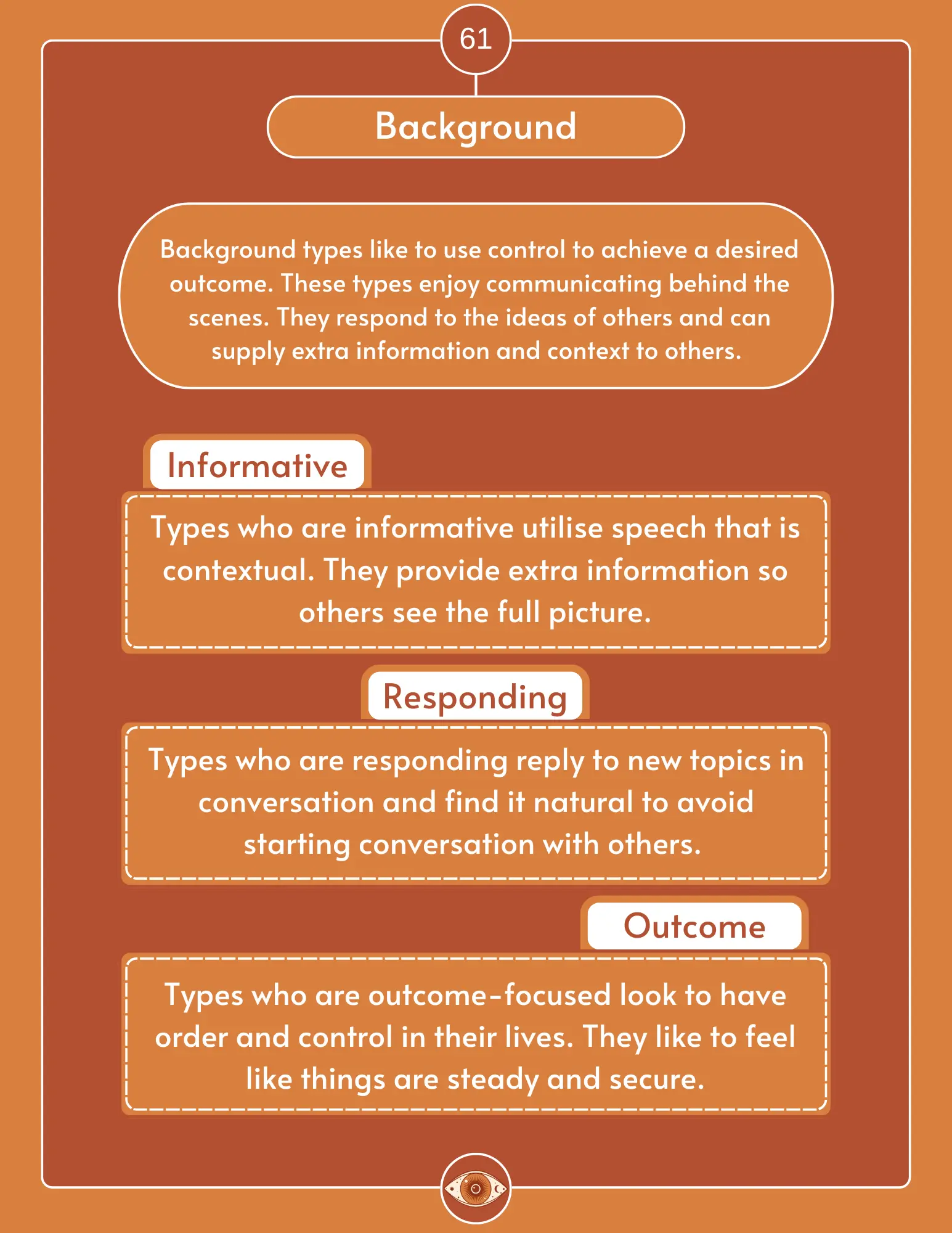
Not sure you are really an INFP?
INFP gets confused with INFJ and ISFP all the time. If you want to be certain, a typing session will settle it.