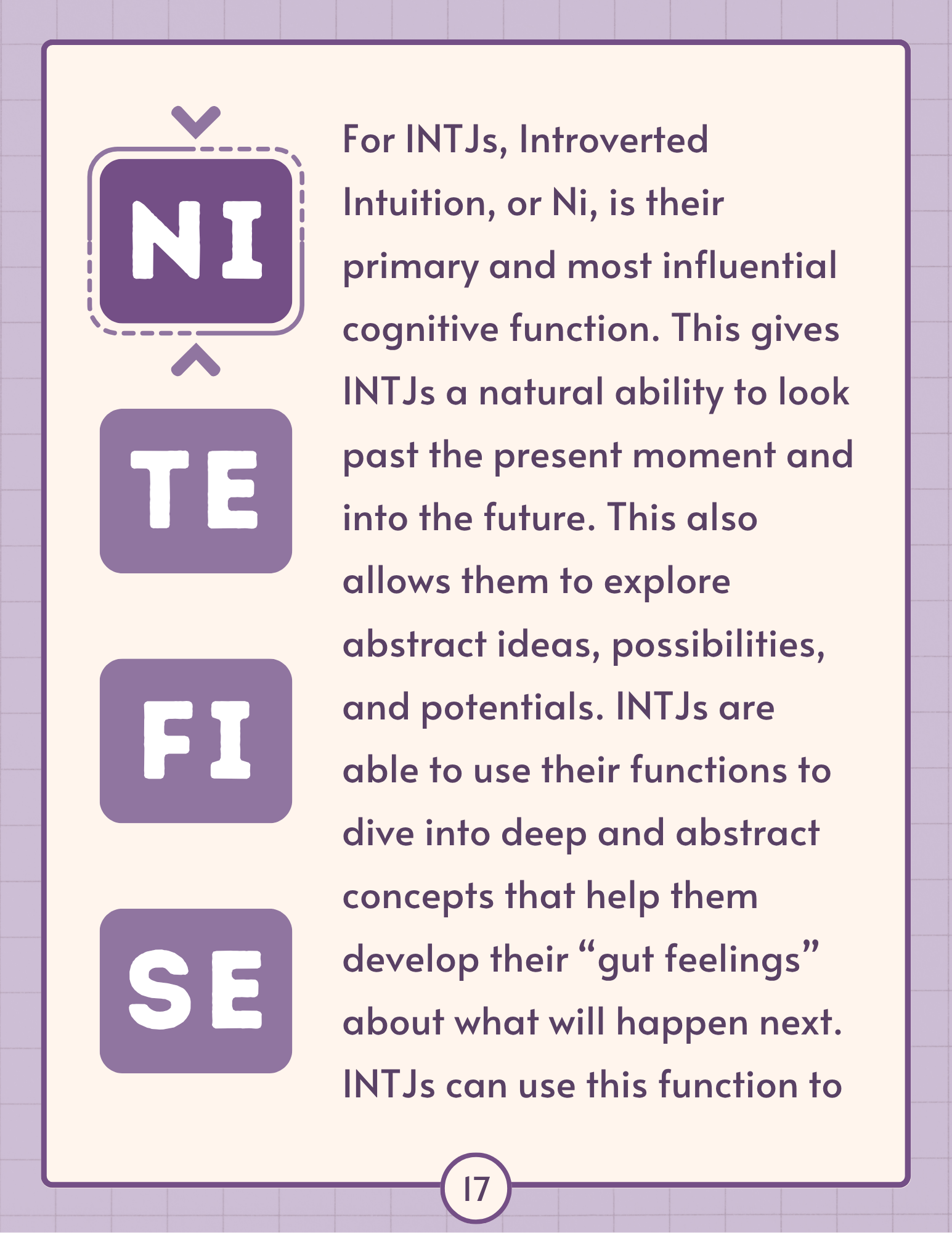
NiHero · position 1
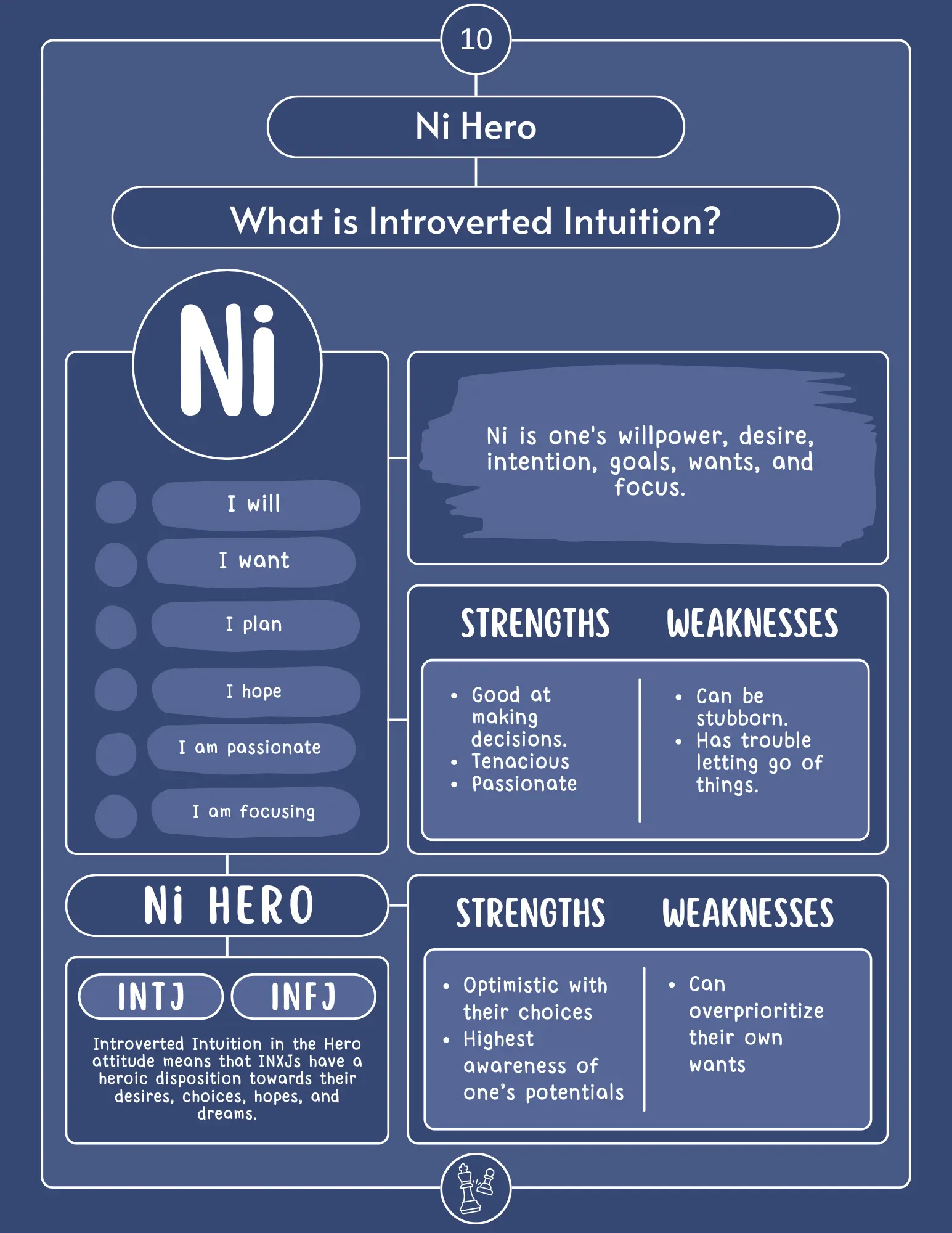
Introverted Intuition
- “I want”
- “I will”
- “I hope”
- “I plan”
Ni is tied to personal wants, intention, goals, foresight and future direction. In the Hero position it is the INTJ's go-to way of solving problems and the function they use with the most awareness and optimism. This can make INTJs determined about where they want to go and attentive to how present choices may shape a future outcome.
How to work with it
A Hero function can become overconfident when one direction receives too much attention. Keep the goal clear, but revisit whether it still reflects what you want and whether new information should change the plan.
TeParent · position 2
Extraverted Thinking
- “We think”
- “You are right”
- “We know”
Te deals with external rationale, sources, rules, statistics, reputation and what other people consider correct. The Parent is the most responsible attitude, and it takes more energy to use than the Hero. INTJs may be skeptical of claims until they see solid data, building beliefs that are carefully supported.
How to work with it
Keep your standard for evidence, and let others know what would change your mind.
FiChild · position 3
Introverted Feeling
- “I feel good / bad”
- “I am good”
- “I value”
Fi covers personal feelings, values, morals and self-worth. In the Child position it is used with natural optimism and energy, alongside the Hero. INTJs may be genuine about their values and clear about how they feel, but can overestimate their own goodness when underdeveloped.
How to work with it
Keep your sincerity, and check your self-assessment against how your actions actually affect people.
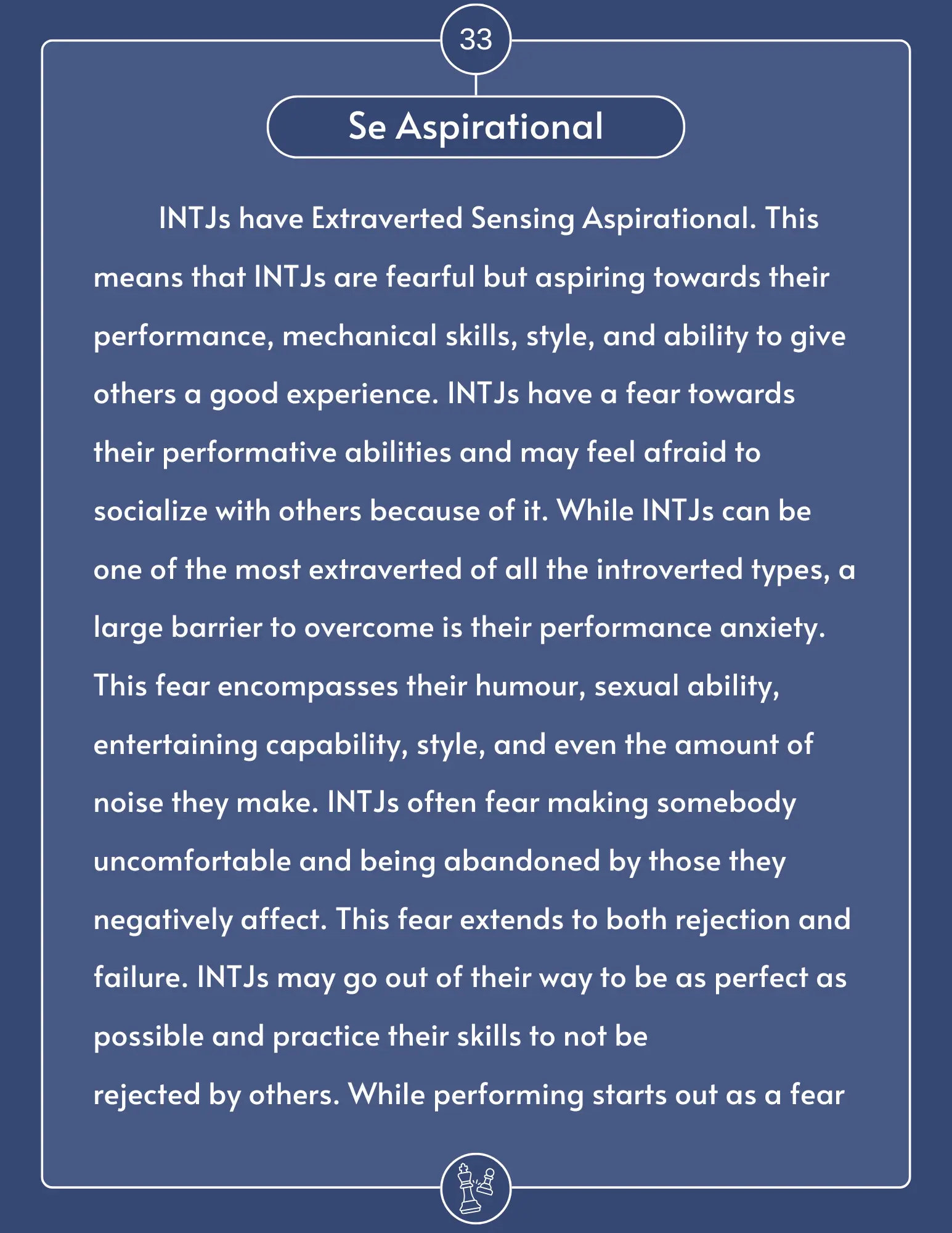
SeAspirational · position 4
Extraverted Sensing
- “You need”
- “You should”
- “We have to”
Se is tied to the external present, physical reality, performance, practical skill and other people's sensory experience. In the Aspirational position, insecurity exists alongside strong potential. INTJs may feel unsure about their performance or physical abilities while also wanting to become more capable and confident in these areas.
How to work with it
Develop Se through practice. Physical skills, performance, exercise, cooking or hands-on work give you repeated experience of acting in the present instead of only planning ahead.
NeNemesis · position 5
Extraverted Intuition
- “You want”
- “You could”
- “We will”
Ne tracks other people's wants and intentions, external possibilities and likely consequences. In the Nemesis position it becomes an area of worry and uncertainty. INTJs may become unsure about what someone really wants, or whether they are still wanted, and may assume a negative intention before enough information is available.
How to work with it
Don't treat an assumption about someone's intentions as a fact. Ask what the person actually wants, give them the benefit of the doubt, and let uncertainty become clearer with time.
TiCritic · position 6
Introverted Thinking
- “I think”
- “I know”
- “This makes sense”
Ti handles personal true-or-false judgment: whether an idea makes logical sense to you. In the Critic position it is doubly pessimistic, so it tends to start out as unrealistic criticism. INTJs may be overly critical of their own conclusions and hold themselves to an unrealistic standard of logic. With development, this can become wisdom in their thinking.
How to work with it
Verify your reasoning without doubting your intelligence, and don't expect perfection from yourself or others.
FeTrickster · position 7
Extraverted Feeling
- “We feel”
- “You are good”
- “We appreciate”
Fe tracks other people's feelings, ethics, care and collective judgments about what is good or bad. In the Trickster position these areas receive little automatic attention. INTJs may not automatically notice how others feel or what social norms expect, and can hurt people unintentionally by over-correcting them.
How to work with it
Ask how a decision will land with the people affected. People strong in Fe can help you learn the unwritten rules.
SiDemon · position 8
Introverted Sensing
- “I need”
- “I should”
- “I have to”
Si covers personal experience, the past, comfort, personal needs, duty, loyalty and routine. In the Demon position these areas have very low awareness and can take on a strongly negative tone when activated. For INTJs, painful past experiences or perceived disloyalty may become hard to release, sometimes creating a strong need to make the situation right.
How to work with it
Protect your basic comfort and needs, keep expectations of loyalty realistic, and work toward forgiveness when old experiences keep controlling the present.