The researchers · Dr. Carl Jung
The cognitive functions
Where the sixteen types begin: Carl Jung's idea that people differ in how they take in information and how they make decisions, and that each of these processes can face inward or outward.
From Jung to OnType
Two attitudes, four functions, eight processes
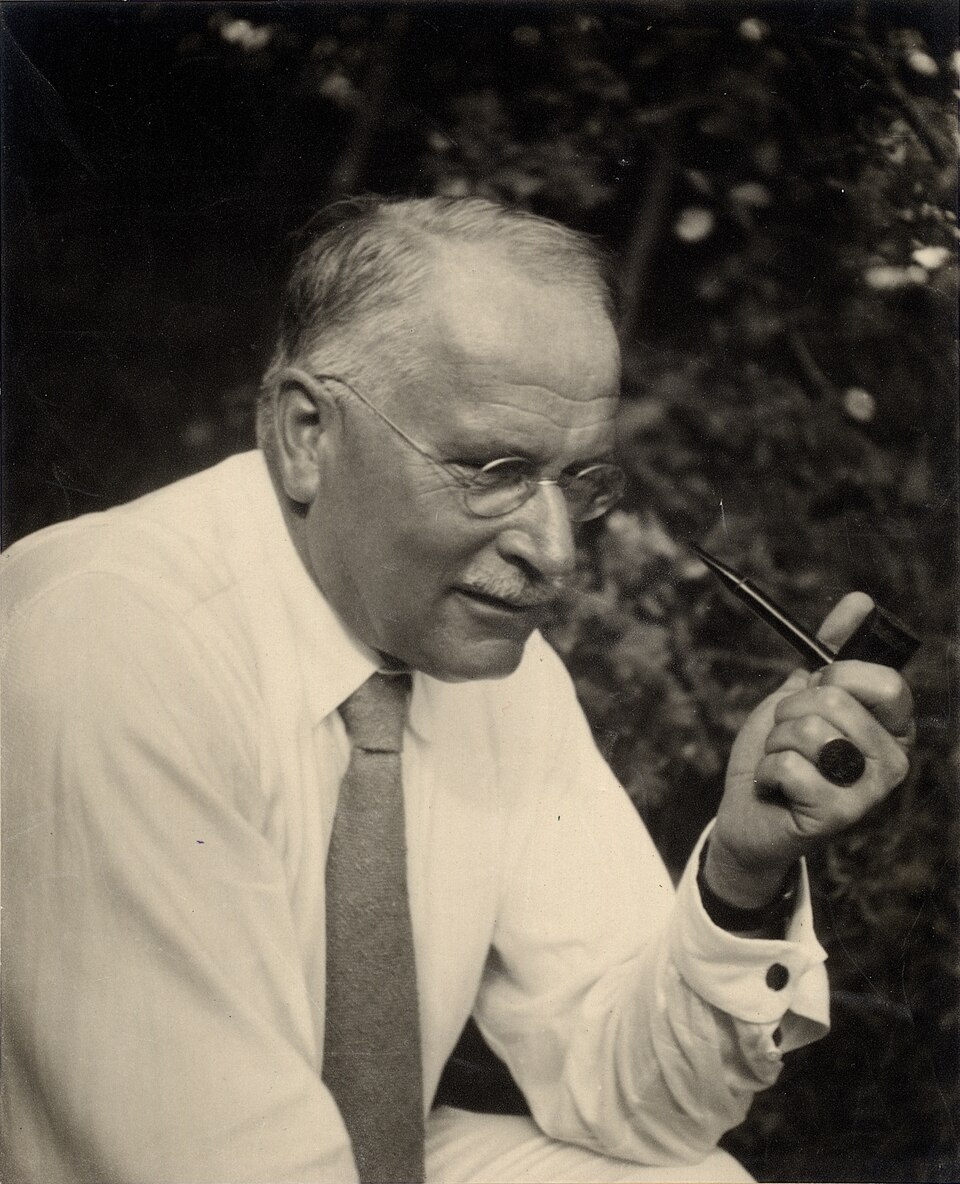
Swiss psychiatrist Carl Jung, the founder of analytical psychology, set out his theory of psychological types in Psychological Types (1921). He proposed two attitudes, introversion and extraversion, and four functions. Thinking and feeling were rational, or judging, functions; sensation and intuition were irrational, or perceiving, functions.
Because each function can point inward or outward, Jung's model yields eight function-attitudes. He saw that each person relies most on one of them, a dominant function, supported by an auxiliary. That observation is the seed of every type code.
OnType treats the eight function-attitudes as the building blocks of personality. The perceiving functions describe how we process the world and are tied to our instincts: our needs and our wants. They also shape how we experience time. Sensing looks to the present and the past; intuition looks to the future. The judging functions describe how we evaluate what we perceive, through logic and belief on the thinking side and through values and ethics on the feeling side.
The model at a glance
Eight functions, two families
Four perceiving functions take in information. Four judging functions make decisions. Each links to its own page.
In OnType's model
Every type uses all eight
Where Jung emphasised the dominant and auxiliary functions, OnType follows the later view that every type uses all eight, in a set order. The order decides which functions feel natural and which feel difficult.
Se focuses on what others experience and need in the moment, while Si holds a person's own past and needs. Ni shapes a personal vision of where someone wants to go, while Ne looks outward at the possibilities and futures around them. The position each function holds, and the attitude it takes on there, is the subject of Beebe's model.
Sources
- Jung, C. G. (1921/1971). Psychological Types. Collected Works, Vol. 6.
- Jung, C. G. (1912/1916). Psychology of the Unconscious (B. M. Hinkle, Trans.). Dodd, Mead.
- Detloff, W. (1972). Psychological types: Fifty years after. Psychological Perspectives, 3(1), 62–73.
- R.G., J. The Code Behind the 16 Types. OnType.
More on the model: Beebe: attitudes · Keirsey: temperaments · Berens: interaction styles · C.S. Joseph: four sides
Which functions lead for you?
Take the free test to see where you fit, or read how the pieces work together.